

This post may contain affiliate links. If you buy through them, we may earn a small commission at no extra cost to you. Learn more
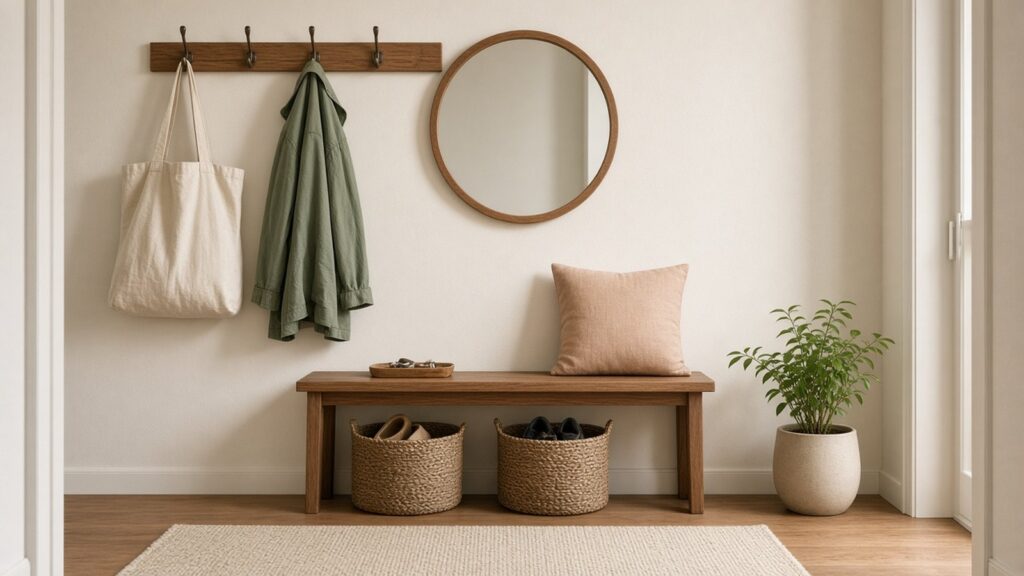
No coat closet by the front door? You are not stuck with a pile of shoes and a chair buried under jackets. To organize an entryway with no closet, give one wall a clear job: hooks for what you wear every day, a bench or rack with a firm shoe limit, a small spot for keys and mail, and a basket or bin for each person’s small stuff. Everything else gets stored somewhere else. You can set this up in an afternoon, on a budget, and without drilling if you rent.
Below: a step-by-step plan, the best entryway storage ideas when there is no closet, layouts for different spaces, a checklist, and common mistakes.
What a Closet-Free Entryway Actually Needs to Hold
Without a closet, everything that lands by the door is on display, so first decide what truly belongs there. For most homes, the list is short:
- Everyday outerwear: one jacket or coat per person for the current season.
- Bags: work bags, backpacks, a tote for errands.
- Shoes: the one or two pairs each person wears most this week.
- Grab-and-go items: keys, sunglasses, a dog leash, hats and gloves in season.
- Incoming paper: mail and anything that needs to leave the house tomorrow.
Everything else, like off-season coats, the rest of the shoe collection, or sports gear you use once a month, lives in a bedroom closet, under a bed, or on a high shelf.
How to Organize an Entryway With No Closet: Step by Step
Grab a tape measure, a trash bag, and a donation box. Plan on an afternoon.
1. Clear the landing zone
Pick everything up off the floor, hooks, chairs, and nearby surfaces. Sort it into three piles: belongs by the door, belongs elsewhere in the house, and donate or toss. If the clutter by the door is a symptom of the whole home, our decluttering checklist of 50 things to throw away today is a quick place to start.
2. Measure the wall, the floor, and the door swing
Measure the wall you want to use, how far furniture can stick out into the walkway, and the arc of the front door. Leave the door’s full swing clear, plus room to walk past. In a tight entry, a bench or shoe rack about 12 to 14 inches deep is often the limit. Write the numbers down before you shop.
3. Choose a one-wall layout
Without a closet, one well-planned wall does the work of a whole foyer. A simple layout that fits most small spaces, from top to bottom:
- Top: a small shelf or a row of baskets for hats, gloves, and seasonal items.
- Middle: hooks for coats and bags, with a mirror beside them.
- Bottom: a bench, shoe rack, or low cube shelf with bins for shoes and small gear.
If you only have room for one piece of furniture, make it a bench with baskets underneath.
4. Hang hooks at two heights
One row of hooks at adult height handles coats and bags; a second, lower row lets kids hang their own backpacks. Plan one hook per person plus a spare for guests, spaced so bulky coats don’t pile up. If you can’t drill, use a freestanding coat rack or removable adhesive hooks rated for the weight you plan to hang. Our guide to renter-friendly storage hacks (no damage) covers no-drill options for every room.
5. Set a shoe limit
Shoes are the number one reason a closet-free entryway looks messy. Decide on a number, such as two pairs per person, and give that number a defined home: a two-tier rack, the space under a bench, or one basket per person. When a new pair comes in, an older pair moves to the bedroom.
6. Create a drop spot for keys and mail
A small tray or a key hook stops pocket clutter from spreading to the kitchen counter. Add one slim mail sorter and clear it weekly.
7. Finish with a mirror, a light, and a rug
A mirror makes a small entry feel larger. A washable rug or boot tray catches dirt and visually marks the entry zone, which helps a lot when the front door opens straight into the living room.
Entryway Storage Ideas When There Is No Closet
You don’t need all of these. Pick the two or three that match your space, your household, and whether you can drill.
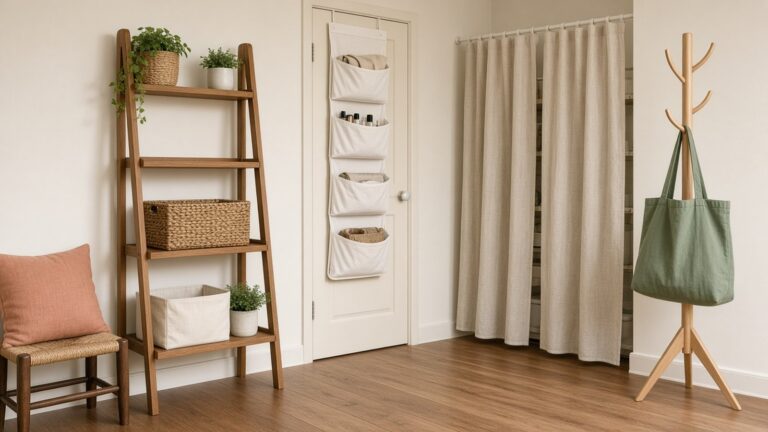
Freestanding coat rack or slim hall tree
A coat rack fits in a corner and holds several coats and bags without touching the walls. A hall tree combines hooks, a bench, and often a shelf in one footprint, the closest thing to a closet you can buy. Check the depth so it doesn’t crowd the door.
Bench with baskets underneath
A narrow bench gives you a place to sit and put on shoes, and open baskets below hide the visual mess of mismatched pairs.
Low cube shelf with one bin per person
A two- or three-cube shelf on its side works as a bench and storage unit in one. Give each person a bin for hats, gloves, and small gear, and use the top for a key tray. Fabric bins with handles slide in and out easily; for example, these SpaceAid fabric storage cubes measure about 10.5 inches on each side, have a clear front window so you can see what’s inside, and fit cube shelves with openings of 11 inches or more. A clip-on label on each bin, such as metal basket label clips you can write on with chalk marker, tells everyone where their things go and makes it easy to relabel later.
Over-the-door hooks on a nearby door
If a bedroom or bathroom door is close to the entry, an over-the-door hook rack adds hanging space without using any floor. Make sure the door still closes fully.
A curtain “closet” in a corner
If you have a corner or alcove near the door, a tension rod with a simple curtain in front of a coat rack creates a hidden closet in minutes. It works well for renters and costs very little.
Rotate off-season gear out of the entry
The easiest way to keep a closet-free entryway calm is to store only this season by the door. Pack winter boots in summer, and sandals in winter, in a lidded bin under a bed or on a closet shelf. Zippered shoe bins with clear tops, like SpaceAid’s space-saving shoe organizer (about 17 by 17 inches and 12.5 inches tall, with adjustable dividers), keep the pairs visible and dust-free until you need them. Measure your under-bed clearance or shelf height first.
Small Entryway Layouts for Different Spaces
The front door opens straight into the living room
Common in apartments. Create a “visual entry” with a rug, then place a slim console, narrow bookcase, or bench against the closest wall. The back of a sofa can also act as a divider. The goal is a clear “drop it here” spot before things spread through the room. Our studio apartment organization ideas on a budget show how to zone a one-room home in the same way.
A narrow hallway
Go vertical and shallow: a row of hooks, a shelf above them, and a slim shoe rack no deeper than a shoe is long. Skip the bench if it blocks the path.
Entryway With No Closet Checklist
- ☐ Floor, hooks, and nearby surfaces cleared
- ☐ Items that belong elsewhere put away; donations bagged
- ☐ Wall width, walkway depth, and door swing measured
- ☐ One wall chosen and zoned top, middle, and bottom
- ☐ At least one hook per person, plus a spare
- ☐ Shoe limit set and given a defined home
- ☐ Key tray or hook and a single spot for mail
- ☐ One bin or basket per person for small gear
- ☐ Off-season coats and shoes stored away from the door
- ☐ Mirror and washable rug or boot tray in place
Common Mistakes to Avoid
- Trying to store everything by the door. Without a closet, the entry can only hold what you use this week. Move the rest.
- Buying furniture before measuring. A bench that’s too deep blocks the door or the walkway, and you will stop using it.
- Too few hooks. When hooks are full, coats land on chairs. Add one more hook than you think you need.
- Overloading adhesive hooks. Check the weight rating, especially for heavy bags and winter coats, and test on a hidden spot first.
- Lidded boxes for daily items. If putting something away takes two steps, it won’t happen. Use open baskets.
How to Keep It Organized
The system only works if it gets reset. Each evening, hang up anything on the floor, return extra shoes to the bedroom, and empty the mail spot. It takes two minutes and fits easily into a 15-minute daily cleaning routine. Once a season, swap out-of-season coats and shoes and wash the rug.
If the overflow is coming from a bedroom closet that is already full, our guide on how to organize a small closet with no built-ins can help you free up room for the off-season gear.
FAQ: Organizing an Entryway Without a Closet
Where do you put coats if you don’t have a coat closet?
Use wall hooks, a freestanding coat rack, or a hall tree near the door for the coats you wear every day. Keep one coat per person by the entry and store the rest in a bedroom closet. If you can’t drill, a freestanding rack or an over-the-door hook rack on a nearby door works without damaging walls.
How do you organize shoes by the front door?
Set a limit, such as two pairs per person, and give those pairs a defined spot: a two-tier rack, baskets under a bench, or a slim shoe cabinet. Add a boot tray for wet shoes, and store off-season pairs in bins elsewhere in the house.
How do I make an entryway when the front door opens into the living room?
Define the space with a rug, then add one piece of furniture on the closest wall, like a bench or narrow console, with hooks above it. That visual boundary keeps coats, bags, and shoes at the door.
What are good small entryway storage ideas for renters?
Choose pieces that don’t need drilling: a freestanding coat rack or hall tree, a bench with baskets, a low cube shelf with bins, over-the-door hooks, and removable adhesive hooks rated for the weight.
A Small Entry That Works Every Day
An entryway with no closet doesn’t need a renovation. Clear the clutter, measure, choose one wall, and give each item a home: hooks for coats and bags, a firm shoe limit, a tray for keys, and a bin per person. Store off-season extras elsewhere and reset the space every evening, and the area by your front door stops being the messiest part of your home.




Leave a Reply