
Living in a studio does not mean living in clutter. With a few smart, affordable choices, you can carve out zones for sleeping, working, cooking, and relaxing—even when every square foot does double duty. These studio apartment organization ideas on a budget focus on freestanding pieces, renter-friendly storage, and habits that keep a small space calm without a big spend.
Below you will find a clear plan, zone-by-zone ideas, a budget checklist, and answers to the questions studio dwellers ask most.
Start With a Clear Plan Before You Buy
Organization fails when you add bins before you edit. Spend one weekend emptying surfaces, sorting what you own, and deciding what earns a place in a studio. The goal is simple: fewer things, clearer homes for what stays, and storage that matches the real footprint of your room.
- Declutter ruthlessly. Studios punish “maybe later” piles. Bag trash, donate duplicates, and store off-season clothes elsewhere if you can. A room-by-room pass with a decluttering checklist makes this faster.
- Measure everything. Note doorway widths, window heights, and the depth under your bed or sofa. Cheap storage that does not fit is wasted money.
- Define 3–4 zones. Sleep, cook, work, and lounge. Even if they share floor space, label each zone mentally so every item has a home.
- Set a hard budget. Aim for under $150–$250 for a first-pass upgrade: under-bed bins, a slim cart, hooks, and baskets usually cover the biggest wins.
Take photos of empty corners before you shop. Looking at the blank space later helps you avoid impulse buys that look good online but overwhelm a small room in person.
Studio Apartment Organization Ideas by Zone
Think in zones, not rooms. When each activity has a dedicated patch of floor and a storage home nearby, the studio feels larger even though the square footage never changes.
Sleep zone: bed as the anchor
In most studios the bed is the largest piece, so make it work harder without turning the whole apartment into a bedroom.
- Under-bed storage. Low-profile bins or flat zip bags hold off-season clothes, extra linens, and shoes. Leave a clear path so you can pull them out weekly.
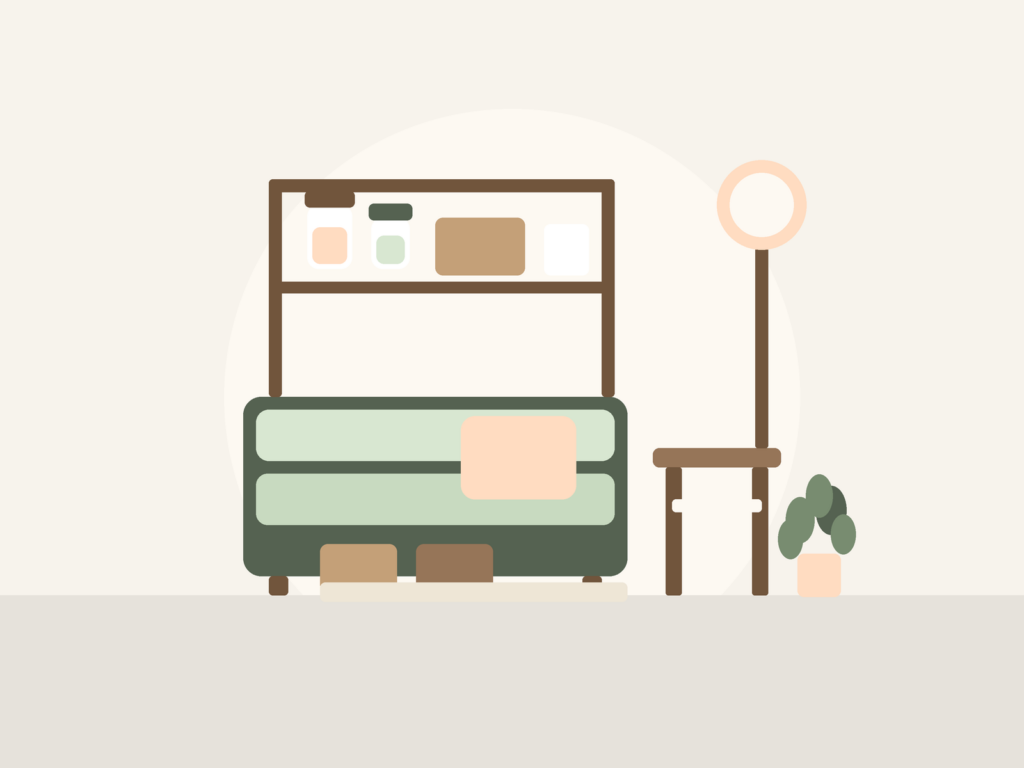
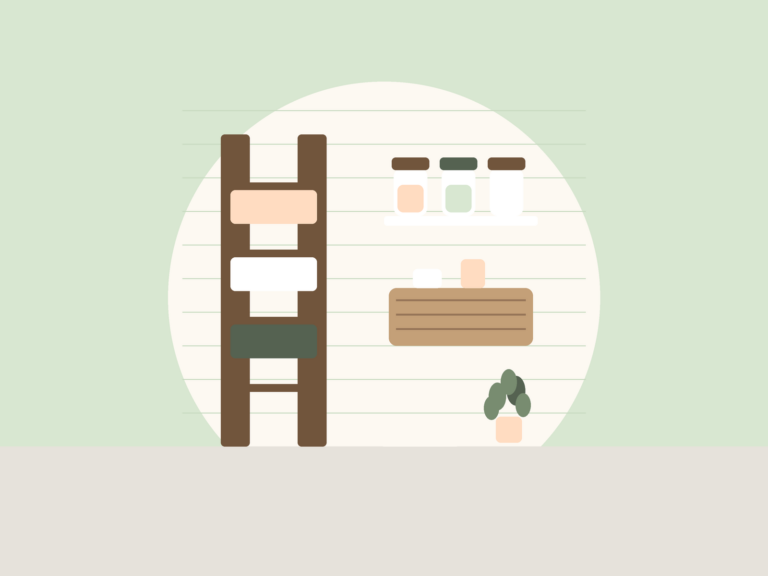
- Headboard alternatives. A freestanding shelf unit or a narrow bookcase behind the bed holds books, a lamp, and a basket for chargers—no drilling required.
- Nightstand substitute. A stack of sturdy crates or a folding tray table costs less than a matching set and can move when you rearrange.
- Bedding discipline. Limit yourself to two sets of sheets and one extra blanket in active rotation. Extra textiles are one of the fastest ways a studio fills up.
Kitchen and pantry corner
Studio kitchens are often a short run of cabinets. Expand vertically and on wheels so counters stay free for cooking, not storage.
- Rolling cart. Park a slim cart beside the fridge for snacks, oils, and overflow. Wheels let you pull it out when cooking and tuck it away after.
- Clear jars and bins. Decant dry goods so you see what you have and stop buying doubles. For shelf-free corners, the same approach used in our guide on how to organize a small pantry without shelves works well.
- Over-the-door rack. Use the pantry or bathroom door for spices, wraps, and cleaning sprays so counters stay clear.
- One-in rule for gadgets. Keep only the tools you use weekly on the counter or in the easiest drawer. Specialty appliances that appear once a year belong in deeper storage—or out of the apartment.
Closet and clothing
One rod is common. Double the hanging space and edit often so laundry does not migrate onto chairs.
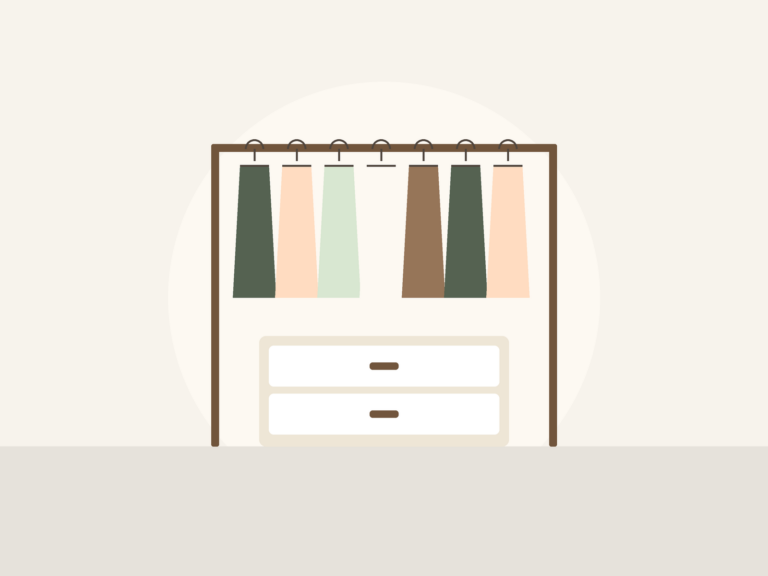
- Double-hang rod. A tension or hanging second rod creates two tiers for shirts and pants without tools.
- Vacuum bags for bulk. Compress bulky sweaters and bedding; store the bags under the bed or on a high closet shelf.
- Uniform hangers. Matching slim hangers free inches of rod space and make the closet look intentional. Pair this with the steps in how to organize a small closet with no built-ins.
- Seasonal swap box. Keep a labeled bin for the opposite season. When the weather turns, swap contents instead of cramming everything onto one rod.
Work and entry micro-zones
A studio needs a place for keys, bags, and a laptop without eating the living area. Small landing spots prevent clutter from spreading.
- Wall hooks or a freestanding coat rack. Keep jackets and bags off chairs.
- Folding desk or lap desk. Fold it flat against a wall or slide it beside the sofa when guests arrive.
- Cable basket. One small basket for chargers and headphones prevents the “tech tangle” on every surface.
- Mail tray. Sort mail the day it arrives: recycle, act, or file. Paper stacks grow fastest in open studios.
Bathroom and cleaning supplies
Small baths fill up fast. Favor over-the-toilet and under-sink options that leave no holes—ideas that overlap with small bathroom storage ideas without drilling.
- Tension shower caddy for bottles
- Under-sink stackable drawers for toiletries
- One cleaning caddy you can carry room to room so products are not scattered
- A single towel set per person in active use, with extras in under-bed storage
Budget Storage Checklist (Under $250)
Use this as a shopping list. Buy only what matches your measurements, and prioritize the items that unlock floor space first.
- 2–4 under-bed storage bins or zip bags
- 1 slim rolling cart (kitchen or bath)
- 1 set of clear jars or pantry bins
- 1 over-the-door organizer
- 1 double-hang closet rod or hanging shelves
- 6–10 slim hangers
- 3–5 woven or fabric baskets for open shelves
- A freestanding coat rack or adhesive-safe hooks (test first)
- 1 cable/tech basket
- Labels (masking tape and a marker work fine)
Shop thrift stores, big-box basics aisles, and online marketplace “like new” listings before buying full-price organizers. Freestanding furniture that folds or nests is almost always a better studio investment than fixed built-ins you cannot take with you when you move.
Daily Habits That Keep a Studio Organized
Storage alone is not enough. Pair it with short routines so the system resets itself.
- Two-minute reset after meals. Wipe the counter, load the sink or dishwasher, and return the cart.
- Evening surface sweep. Clear the table, sofa arm, and entry hook before bed. A compact 15-minute daily cleaning routine fits studio life well.
- One-in, one-out. When a new mug, hoodie, or gadget arrives, one similar item leaves.
- Weekly under-bed check. Pull one bin, refold, and vacuum dust so storage stays usable.
- Sunday ten-minute zone walk. Spend two minutes in each zone putting strays back. Small weekly passes beat monthly overwhelm.
Common Mistakes in Studio Organization
- Buying cute bins before decluttering. You will organize clutter you do not need.
- Ignoring vertical space. Walls, doors, and the air above counters are free square footage.
- Oversized furniture. A bulky sectional or tall armoire can block light and paths.
- No designated landing spot. Without a hook or tray for keys and mail, surfaces become dumps.
- Storing everything “for later.” Studios need frequent editing, not endless backup supplies.
- Hiding everything in opaque boxes. If you cannot see contents, you will buy duplicates. Use clear bins or labeled baskets for daily items.
FAQ: Studio Apartment Organization on a Budget
How do I organize a studio apartment with no closet?
Use a freestanding garment rack, under-bed bins, and an over-the-door organizer on the bathroom or entry door. A narrow bookcase can hold folded clothes in baskets. Keep only what you wear in the current season in the open rack.
What is the cheapest way to add storage in a studio?
Start with under-bed bins, a tension or hanging closet rod, and thrifted baskets. These three usually unlock the most space for the least money and require no tools.
How can I make a studio feel like separate rooms?
Use an open bookshelf, folding screen, or curtain on a tension rod as a soft divider between bed and living area. Keep each zone’s items in that zone so the layout stays clear even without walls.
How often should I declutter a studio apartment?
Do a quick surface reset daily and a deeper edit every season when you swap clothes. Studios fill faster than larger homes, so small, frequent edits beat rare marathon cleanouts.
A Calmer Studio Without Overspending
Studio apartment organization on a budget is less about perfect furniture and more about editing, zones, and a few hardworking pieces. Measure first, buy second, and give every item a home you can reach in seconds. Start with under-bed storage and one rolling cart this week—you will feel the difference every time you walk through the door.


Leave a Reply