

This post may contain affiliate links. If you buy through them, we may earn a small commission at no extra cost to you. Learn more
Small bathrooms run out of storage fast, and if you rent, drilling into tile or walls may not be an option at all. These small bathroom storage ideas add space without a single hole: over-the-toilet units, tension rods, door racks, and a properly organized vanity. The biggest win in most small bathrooms is the cabinet under the sink, so this guide includes a full 9-step plan for it.
Below: a quick clear-out and measuring plan, how to organize under the bathroom sink step by step, no-drill ideas for the toilet, counter, shower, door, and floor, a checklist, common mistakes, and an FAQ.
Step 1: Clear Out Before You Add Storage
New storage works best when you only store what you actually use. Before buying anything:
- Empty the cabinet, counter, shower, and any drawers.
- Discard expired products, old makeup, dried-out products, and nearly empty bottles. Combine duplicates.
- Take expired medications to a pharmacy take-back program or follow local disposal guidance.
- Group what remains: daily essentials, backup supplies, cleaning products, towels, and occasional-use items.
- Move backup supplies, like bulk toilet paper or extra shampoo, to a hall closet if you have one.
This step alone often frees up a surprising amount of space. If the purge feels slow, our decluttering checklist of 50 things to throw away today includes plenty of bathroom items to start with.
Step 2: Measure Your Space
Bathrooms are full of awkward dimensions. Measure:
- The width and height above the toilet
- The inside width, depth, and height of the vanity, plus the clear width on each side of the drain pipe
- The gap between the toilet and the vanity or wall
- The top and back of the bathroom door
- The shower or tub, including corners
Keep these numbers on your phone so you can check fit while shopping.
How to Organize Under the Bathroom Sink in 9 Steps
The vanity is usually the only closed storage in a small bathroom, but it is also a damp space split by a drain pipe. It works best with a few clear categories instead of “everything that didn’t fit on the counter.” Here is a simple zone plan:
| Zone | What goes there | Easiest container |
|---|---|---|
| Front, widest side | Daily toiletries you reach for every morning | Pull-out drawer or two-tier organizer |
| Back corners | Backups: one spare of each product | Clear bin or small turntable |
| One side, up high if possible | Bathroom cleaning supplies | Small caddy you can carry out |
| Inside of the door | Hair dryer, brushes, flat tools | Over-the-door basket or caddy |
| Under or in front of the trap | Spare toilet paper, washcloths | Low lidded bin or shelf riser |
1. Empty the cabinet and look for leaks
Take everything out and put it on a towel. With the cabinet empty, run the faucet for a minute and check the drain pipe, the supply lines, and the shut-off valves for drips. Look for warping, stains, or a musty smell. Fix any leak first, or call your landlord if you rent.
2. Clean, dry, and line the base
Wipe the cabinet with a mild cleaner, then let it dry completely with the doors open. Add a waterproof shelf liner or a mat with raised edges; it catches small drips and makes them easy to spot. Doing the whole room? Our step-by-step guide on how to deep clean a bathroom covers the shower, toilet, and floors too.
3. Edit before you buy anything
Sort what came out into keep, move elsewhere, and toss. Expired sunscreen and skincare, near-empty bottles, and hotel samples you never use can go. Keep one spare of each product under the sink and move the rest of the backstock to a closet.
4. Measure around the drain pipe
Measure the inside width of the cabinet, the clear width on each side of the pipe, the depth from the door frame to the back wall, and the height under the curve of the trap. Also check how far the hinges and the face frame stick in, because they can stop a wide bin from sliding out.
5. Assign zones
Use the zone plan above: daily items on the widest side at the front, backups behind them, and cleaning supplies together on the other side. Keep the area around the shut-off valves clear so you can reach them fast.
6. Add a pull-out drawer or two-tier organizer on the widest side
Sliding storage brings the back row to you. A two-tier pull-out organizer fits around the drain when it is narrow enough; a single-level drawer works when one side has more room. For example, SpaceAid’s no-drill pull-out cabinet drawer attaches with adhesive instead of screws, is 17 inches deep, and adjusts from 11.8 to 19.6 inches wide, so it only suits a vanity with at least 11.8 inches of clear width beside the pipe. Check your measurements from step 4 first.
7. Use the height you’re wasting
Most vanities have a tall, empty gap above short bottles. A shelf riser doubles the usable floor: bottles on top, a low bin underneath. Risers often fit in front of the drain, too, if there are about 10 inches between the pipe and the door. SpaceAid’s metal and wood cabinet shelf measures 13 by 9.75 inches and 7.25 inches tall, which leaves room for a roll of toilet paper or a small bin below. A small tension rod across the top of the cabinet also works: hang spray bottles by their triggers to free up the floor.
8. Put the cabinet doors to work
The inside of the doors is free space for flat or hanging items: a hair dryer, a round brush, a flat iron, or cleaning cloths. Use a slim over-the-cabinet-door basket or caddy, and check that it clears the pipes and the sink bowl when the door shuts. Always let hot tools cool completely before you put them away.
9. Corral small things in clear bins, then label
Clear, open-top bins with handles keep categories apart and let you see what is inside: one for hair accessories, one for razors and refills, one for first aid basics. Put a small turntable in a back corner for tall bottles so nothing hides. Label each bin so everyone puts things back in the same place.
Under-Sink Ideas for Shared Bathrooms, Kids, and Renters
Shared bathrooms: one bin per person
When two or more people share a vanity, give each person one bin or one drawer, in a different color or with a name label. Shared items like toothpaste backups and cleaning supplies get their own neutral zone. It ends the “whose is this?” pile.
Homes with young kids or pets
Install child safety latches on the vanity doors if small children live in or visit your home. Better yet, move cleaning products, razors, and anything else risky to a high shelf or a locked box, and keep only kid-safe items under the sink. Store cleaners in their original labeled containers, and never keep products that should not be mixed (such as bleach and ammonia-based cleaners) loose in the same bin.
Renters: no holes, no damage
Freestanding bins, risers, turntables, tension rods, and over-the-door caddies need no tools at all. Adhesive pull-outs avoid drilling, but test the tape on a hidden spot and remove it carefully before you move out. Our guide to renter-friendly storage hacks (no damage) has more ideas that come out cleanly.
Pedestal sinks and tiny vanities
With a pedestal sink or a very narrow vanity, the storage has to move elsewhere. A fabric sink skirt or a freestanding under-sink unit designed to fit around the pedestal can hide a few bins, and the over-the-toilet, door, and floor ideas below pick up the rest.
What Not to Store Under the Bathroom Sink
The space under a bathroom sink gets warm, humid, and sometimes wet. A few things are better kept somewhere else:
- Medications. Many labels say to store them in a cool, dry place, and a bathroom often isn’t one. A closet shelf or a kitchen cabinet away from the stove is usually a better spot.
- Bulk paper goods. One or two spare rolls of toilet paper are handy, but keep them in a lidded bin or on a riser so a drip doesn’t ruin them, and store the big pack elsewhere.
- Anything flammable or very hazardous, especially near a hair dryer or other hot tools.
- Things that belong in other rooms, like kitchen backstock, tools, or batteries. If your kitchen sink cabinet is the overflow spot, our under-sink kitchen organization ideas show how to set up that cabinet too.
Over-the-Toilet Storage
The space above the toilet is often the largest unused area in a small bathroom.
Freestanding Over-the-Toilet Shelving
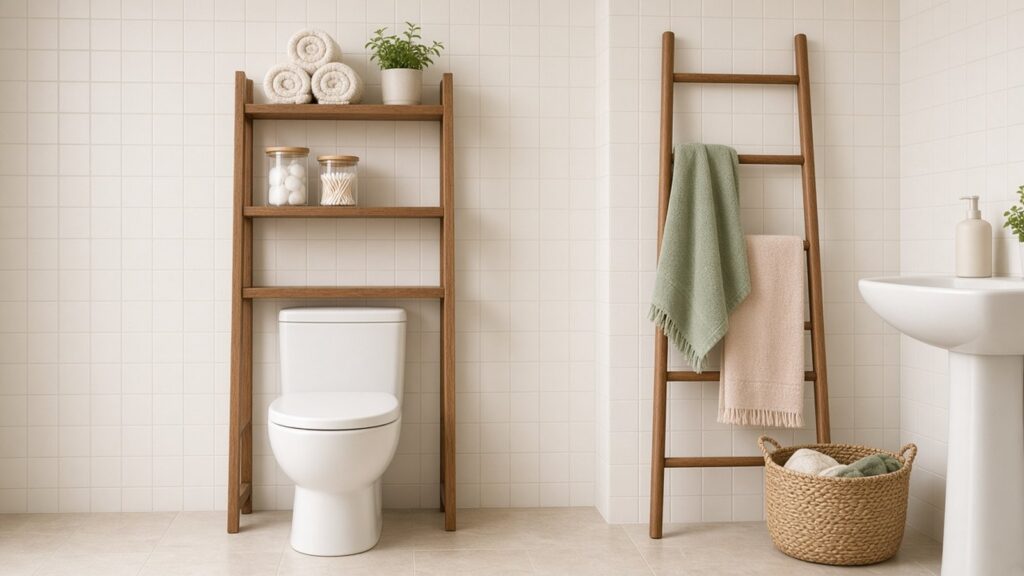
These units stand on the floor and straddle the toilet, giving you two or three shelves without any wall mounting. Use them for towels, baskets of toiletries, and a small plant or candle. For stability, choose a unit with adjustable feet, and keep heavier items on lower shelves.
Tank-Top Trays
A simple tray on the toilet tank corrals a few items, like a spare roll and hand soap, so the surface looks tidy. Keep it light and easy to lift, since you may need access to the tank.
Countertop Storage
Small vanities often have very little surface space, so keep the counter for daily essentials only.
- Use a tiered stand or lazy Susan to stack items vertically and rotate them into reach.
- Corral items on a tray so the counter is easy to wipe clean.
- Choose a cup or holder for toothbrushes rather than letting them lie on the counter.
- Use small lidded jars for cotton pads and swabs.
- Keep makeup and skincare to one routine-based tray and move backups elsewhere. Our guide on how to organize makeup and skincare in a small space covers vanity drawers, medicine cabinet shelves and dresser alternatives.
Shower and Tub Storage
Tension Pole Shower Caddies
A tension pole caddy fits in the corner of a tub or shower and holds several shelves of products. It is held in place by pressure between the floor and ceiling, so there is no drilling. Choose rust-resistant materials.
Over-the-Showerhead Caddies
These hang from the shower arm and hold shampoo, conditioner, and soap. Avoid overloading them, which can cause them to slide or tilt. If you use shampoo or soap bars, a slim 4-tier shampoo bar holder keeps them off wet ledges; it mounts with an adhesive pad that needs about a day to set on a smooth, flat surface, or it can stand on the counter.
Bathtub Caddy Tray
A tray that spans the width of the tub holds soap and a few essentials while you bathe and lifts off when not in use.
Second Tension Rod
Install an additional tension rod inside the shower area, parallel to your curtain rod. Hang S-hooks from it for loofahs, bath toys in a mesh bag, or hanging baskets.
Door and Wall Storage Without Drilling
Over-the-Door Hooks and Racks
The back of the bathroom door can hold towels, robes, or an over-the-door rack with baskets for toiletries. This is one of the easiest ways to add storage instantly.
Adhesive Hooks and Shelves
Removable adhesive hooks and small adhesive shelves can hold lightweight items such as washcloths, razors, or a small basket. Follow the manufacturer’s weight rating, apply to clean, dry, smooth surfaces, and allow the adhesive to cure before loading. Humidity can weaken some adhesives, so test placement carefully and avoid heavy items.
Leaning Ladder Shelf or Towel Ladder
A ladder shelf leans against the wall and offers several levels for towels and baskets. Make sure it’s stable and placed where it won’t be bumped.
Floor and Gap Storage
- Slim rolling carts slide into the gap between the toilet and vanity or wall and hold toiletries, cleaning supplies, or toilet paper.
- Narrow freestanding cabinets fit in corners and hide clutter behind doors.
- Baskets on the floor can hold rolled towels or spare toilet paper.
- A stool with storage provides a seat and a hidden compartment.
Small Bathroom Storage Checklist
- ☐ Expired and unused products cleared out; backups moved to a closet
- ☐ Space measured, including both sides of the drain pipe, the gaps, and the door
- ☐ Under-sink cabinet checked for leaks, dried, and lined
- ☐ Under-sink zones set: daily, backups, cleaning, hair tools
- ☐ Pull-out or two-tier organizer on the widest side; riser using the height
- ☐ Clear bins labeled, one per person in shared bathrooms
- ☐ Shut-off valves easy to reach; safety latch added if needed
- ☐ Over-the-toilet unit or shelf added
- ☐ Shower caddy or tension pole installed
- ☐ Over-the-door hooks for towels and robes
- ☐ Countertop limited to daily essentials
Common Mistakes to Avoid
- Shopping before measuring. Many organizers are wider than the space beside a bathroom drain. Measure first, including the hinges and the face frame.
- Storing hot or damp items. A warm curling iron or a wet washcloth in a closed cabinet adds heat and moisture. Let things cool and dry first.
- Filling every inch. A packed cabinet hides leaks and blocks the shut-off valves. Leave a little open space around the pipes.
- Overloading adhesive hooks and tension rods. Keep loads light and within the stated limits; use freestanding or over-the-door storage for heavier items.
- Using lidded boxes for daily items. Lids add a step, so things end up on the counter. Save lids for toilet paper and backstock.
Tips for Keeping a Small Bathroom Tidy
- Give everything a home. If an item has no assigned spot, it will end up on the counter.
- Store towels rolled to fit more into baskets and shelves.
- Do a quick daily reset: wipe the counter and return items to their bins. A short 15-minute daily cleaning routine makes this automatic.
- Do a two-minute monthly check under the sink: toss empties, move a spare forward, and look for moisture.
- Choose moisture-friendly materials such as plastic, coated metal, or sealed wood to avoid rust and warping.
Frequently Asked Questions
How do I organize under my bathroom sink with pipes in the way?
Treat the drain as a fixed divider. Measure the clear width on each side, put a pull-out drawer or a narrow two-tier organizer on the wider side, and use a slim bin or caddy on the other. A low riser or bin can often sit in front of the pipe, and the doors can hold hair tools.
What should you not keep under the bathroom sink?
Skip medications that should be kept cool and dry, bulk paper goods, flammable products, and anything unsafe within reach of children. Keep cleaning products in their original containers, and don’t store chemicals that shouldn’t be mixed in the same open bin.
How do I keep the cabinet under my bathroom sink dry?
Fix leaks first, then add a waterproof liner. Wipe bottles before putting them back, let towels and hot tools dry or cool before storing them, and check the pipes during a quick monthly reset.
Do adhesive hooks work in bathrooms?
They can, if you choose ones rated for bathroom or humid use and stick them to clean, smooth surfaces. Let them cure before hanging anything and keep loads well within the stated limit. For heavier items, use over-the-door or freestanding options instead.
How can I add storage in a bathroom with no cabinet?
Combine an over-the-toilet unit, a slim rolling cart, and over-the-door hooks. Together they provide shelving, drawers, and hanging space without any installation.
Are tension rods strong enough for storage?
They’re great for lightweight items like spray bottles, shower curtains, and hanging baskets. Make sure the rod is fitted firmly between two solid surfaces and avoid loading it with heavy objects.
A Calmer Bathroom Without Tools
A small bathroom doesn’t have to feel cluttered, and you don’t need a drill to fix it. Clear out what you don’t use, set up the vanity with zones, a pull-out, and a riser, then add a few freestanding, tension, and over-the-door solutions where they make the biggest difference. Expand the same no-damage approach to the rest of your home with these renter-friendly storage hacks.




Leave a Reply