
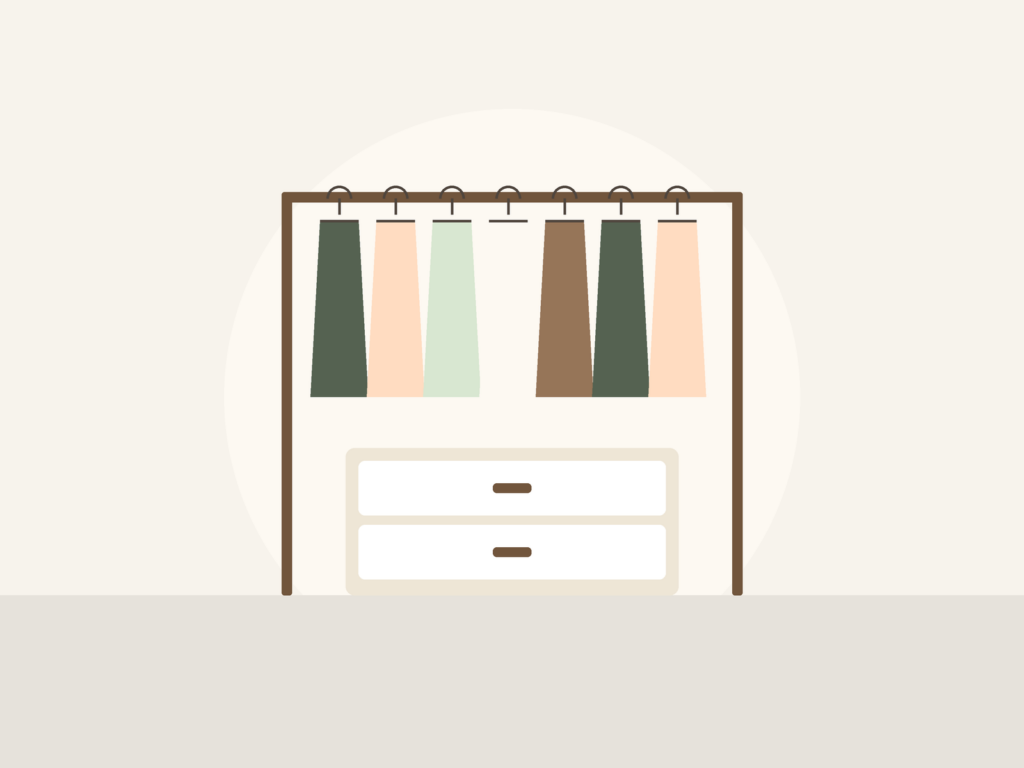
A small closet with nothing but a single rod and a bare shelf can feel impossible to keep tidy. Without built-in drawers, cubbies, or double hanging, clothes pile up and shoes end up on the floor. But you don’t need a custom closet system or renovation to make it work.
This guide shows you how to organize a small closet with no built-ins, using freestanding, hanging, and over-the-door solutions that are renter-friendly and budget-conscious.
Step 1: Empty the Closet Completely
It’s tempting to organize around what’s already there, but starting from empty gives you a clear view of the space and everything in it.
- Take out every item: clothes, shoes, bags, boxes, and anything stored on the floor or shelf.
- Lay items on your bed, grouped loosely by type.
- Vacuum the floor and wipe the shelf and rod.
- Look at the empty space and notice unused areas, like the wall above the shelf or the back of the door.
Step 2: Edit Your Wardrobe
A small closet can only hold so much, so editing is the most effective organizing step. Sort items into four piles:
- Keep: Items you wear regularly that fit and are in good condition.
- Donate or sell: Clean, wearable pieces that no longer suit you.
- Repair: Items that need a button, hem, or zipper fixed. Set a deadline to get them done.
- Discard: Stained, torn, or worn-out items.
If you’re unsure about a piece, ask yourself whether you’d buy it again today. If you keep hesitating, try the hanger trick: turn all hangers backward, and flip each one when you wear the item. After a season, you’ll see clearly what you actually reach for.
Step 3: Store Off-Season Items Elsewhere
Your closet should hold what you wear right now. Move off-season clothing out of prime space:
- Use vacuum-seal bags or lidded bins for bulky items like winter coats and sweaters.
- Slide flat bins under the bed.
- Place labeled bins on the high shelf or on top of a wardrobe.
- Rotate items at the start of each season.
This one change can free up a surprising amount of rod and floor space.
Step 4: Maximize Hanging Space
With only one rod, every centimeter counts.
Switch to Slim, Matching Hangers
Bulky plastic and wooden hangers take up a lot of room. Slim, non-slip hangers save space and keep garments from slipping off. Matching hangers also make the closet look calmer.
Add a Hanging Closet Rod Extender
A double-hang rod hooks over your existing rod and creates a second hanging level below it. Shirts, folded trousers, and skirts fit neatly on both levels, roughly doubling your hanging space for shorter items. No tools or drilling are needed.
Use Cascading Hooks Sparingly
Cascading hanger connectors let several hangers hang vertically from one. They work well for sets or lightweight items, but avoid overloading them, as they can strain the rod.
Step 5: Add Freestanding Storage
When there are no built-in drawers or shelves, bring in your own.
Hanging Shelf Organizers
Fabric hanging shelves attach to the rod with hook-and-loop straps and create cubbies for folded sweaters, jeans, or bags. Choose one sized to your closet’s height so it doesn’t drag on the floor.
Small Drawer Units
A slim plastic or wooden drawer unit on the closet floor holds underwear, socks, workout gear, and accessories. Measure the depth and height under your hanging clothes before buying.
Stackable Shoe Racks
Shoes on the floor quickly turn into a heap. A stackable or expandable shoe rack keeps pairs visible and uses vertical space. In very narrow closets, consider a tall, slim rack.
Lidded Bins and Baskets on the Shelf
The top shelf is often wasted because items fall over or get lost. Use matching bins or baskets to group items like scarves, hats, or spare linens. Add labels so you know what’s inside without pulling everything down.
Shelf Dividers
Clip-on shelf dividers keep stacks of folded clothing or bags upright and separated, so piles don’t topple when you grab something.
Step 6: Use the Door and Walls
The back of the closet door is valuable storage, even without drilling.
- Over-the-door shoe organizers with clear pockets can hold shoes, but also belts, scarves, socks, or accessories.
- Over-the-door hooks hold robes, bags, and tomorrow’s outfit.
- Removable adhesive hooks on interior side walls can hold jewelry, belts, or hats. Check the weight rating and test on a hidden area first to avoid damaging paint.
If you have sliding doors, look at tension rods and slim organizers that sit inside the frame instead.
Step 7: Arrange With Logic
Now return your edited items with a clear system:
- Group by category: shirts with shirts, trousers with trousers, dresses together.
- Then order by color or sleeve length within each category, which makes it easy to see what you own.
- Keep everyday items front and center at eye level.
- Put rarely used items high or at the far ends of the rod.
- Leave a little breathing room so hangers slide easily and clothes don’t crease.
Step 8: Expand Beyond the Closet if Needed
Sometimes a small closet simply can’t hold everything. Supplement it with:
- A freestanding garment rack in the bedroom for coats or frequently worn items
- A dresser or chest of drawers for folded clothing
- Under-bed storage for off-season items and spare bedding
- A wall-leaning ladder for scarves or tomorrow’s outfit
Small Closet Organization Checklist
- ☐ Closet emptied and cleaned
- ☐ Wardrobe edited into keep, donate, repair, discard
- ☐ Off-season clothing stored elsewhere
- ☐ Slim matching hangers in place
- ☐ Double-hang rod added for shorter items
- ☐ Hanging shelf or drawer unit for folded items
- ☐ Shoe rack or over-the-door shoe storage
- ☐ Top shelf organized with labeled bins
- ☐ Items grouped by category and color
How to Keep It Organized
- One in, one out: When you buy a new piece, let an old one go.
- Keep a donation bag in the closet for items you no longer want.
- Do a five-minute weekly reset, re-hanging anything that’s piled up.
- Review seasonally as you swap off-season clothing in and out.
Frequently Asked Questions
How can I add shelves to a closet without drilling?
Use hanging fabric shelves that attach to the rod, freestanding shelving units placed on the floor, or stackable cubes. Shelf dividers and bins make the existing top shelf more useful without any installation.
What’s the best way to store shoes in a tiny closet?
Go vertical. Stackable shoe racks on the floor and over-the-door pocket organizers both hold many pairs in a small footprint. Store off-season shoes elsewhere in boxes or bins.
Should I fold or hang my clothes?
Hang items that wrinkle easily, like shirts, dresses, and tailored trousers. Fold knits and sweaters, which can stretch on hangers, along with T-shirts, jeans, and workout clothes.
Are closet organizers renter-friendly?
Most of the options in this guide are. Double-hang rods, hanging shelves, freestanding units, and over-the-door organizers require no tools and leave no marks. Test adhesive hooks carefully before relying on them.
Make Your Small Closet Work Harder
A closet without built-ins isn’t a lost cause. By editing first, storing off-season items elsewhere, and adding a few no-drill organizers, you can create a closet that’s easy to use every day. Start with the edit this weekend, then add organizers one at a time as you see what your space needs.






Leave a Reply