
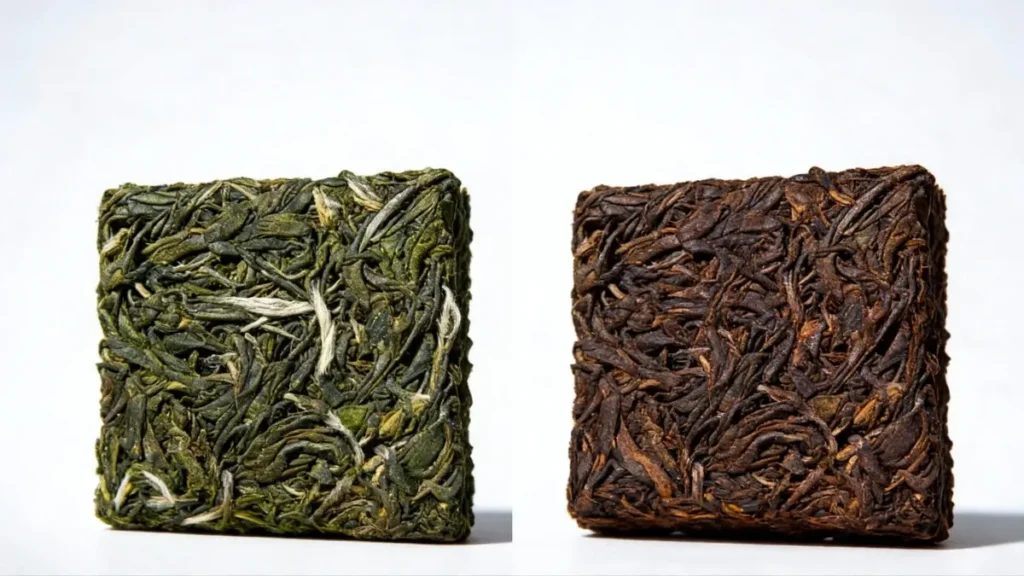
If you’ve searched “sheng vs shou pu-erh” and come away more confused than when you started, you’re not alone. Most explanations jump straight into fermentation science, decade-long aging timelines, and terminology that assumes you already know what you’re looking for. Here’s the same distinction, minus the jargon.
The One-Sentence Version
Shou pu-erh has already been through an accelerated fermentation process that makes it ready to drink now. Sheng pu-erh hasn’t — it’s still slowly changing over months and years, the way wine does.
That’s really the core of it. Everything else — flavor, color, how it feels in your body, how long it can sit before it’s “good” — flows from that one difference.
What This Actually Tastes Like
This is where most guides fail beginners: they explain the process but never tell you what to expect in the cup.
Shou pu-erh tends to taste earthy, smooth, and a bit like dark wood or damp forest floor — some people compare it to coffee or dark chocolate. It’s mellow, low in bitterness, and forgiving if you slightly over-steep it. This is usually the easier entry point for someone brand new to pu-erh.
Sheng pu-erh, especially young sheng, tends to be sharper and more assertive — some bitterness, some astringency, but often followed by a sweetness that lingers in your mouth after you swallow (tea drinkers call this “hui gan”). As sheng ages over years, it mellows out and develops a completely different character — deeper, smoother, more complex. A young sheng and a 15-year-old sheng from the exact same batch can taste like two unrelated teas.
Why the Fermentation Difference Exists At All
Traditionally, sheng pu-erh was pressed into cakes and then aged naturally over years — sometimes decades — with the flavor slowly transforming the entire time. That process works, but it’s slow, and it means the tea isn’t really “finished” for a long time.
Shou pu-erh was developed decades ago as a way to shortcut that aging process. Through a controlled fermentation method (piling the leaves and managing heat and moisture over several weeks), producers found they could recreate a lot of the mellow, aged character of old sheng in a fraction of the time. That’s the entire point of shou — it’s designed to taste like it’s already been aged, without you having to wait.
Neither version is “better” than the other — they’re just built for different things. Shou is about immediate, reliable mellowness. Sheng is about a flavor that keeps evolving the longer you’re willing to wait.
Which One Should You Actually Start With?
If you’re new to pu-erh, shou is usually the more forgiving starting point. It’s mellow, low-risk, and there’s very little chance you’ll brew a batch that tastes harsh or unpleasant, even if your technique isn’t perfect yet.
Sheng is worth exploring once you have a slightly better sense of your own palate — some people love the sharper, more dynamic character of young sheng right away, while others find it a bit much until they try an aged version and understand what all the fuss is about.
A reasonable way to think about it: start with shou to get comfortable with pu-erh as a category, then branch into sheng once you’re ready to explore a tea that’s meant to keep changing on you.
A Few Things That Trip Up Beginners
- “Raw” doesn’t mean unprocessed. Sheng pu-erh still goes through withering and pan-firing like other teas — “raw” just refers to the fact that it hasn’t gone through the accelerated fermentation shou has.
- Age isn’t automatically a marker of quality. An old sheng cake stored badly can taste worse than a well-made young one. Age matters, but only alongside good storage.
- Both types can be re-steeped extensively. If you’ve read our piece on how many times you can re-steep pu-erh, that applies to both sheng and shou — though shou’s more even fermentation tends to make it slightly more forgiving across a long session.
The Bottom Line
You don’t need to memorize fermentation charts to enjoy pu-erh. The practical version is simple: shou is ready now and easy to like; sheng is a tea that rewards patience, and tastes meaningfully different depending on when you drink it. Try both, and let your own palate tell you which direction you want to go deeper into — that’s more useful than any guide, including this one.
If you’re brewing either style in a gaiwan and still working on your technique, our guide on how to brew tea in a gaiwan without burning your fingers covers the grip and pour basics that make everything else easier.
Pingback: How Many Times Can You Re-Steep Pu-erh Tea - LifeUpDaily