
This post may contain affiliate links. If you buy through them, we may earn a small commission at no extra cost to you. Learn more
The cabinet under your kitchen sink is awkward on purpose: pipes run through the middle, the floor of the cabinet can get damp, and the back corners are hard to see. The good news is that under sink kitchen organization is mostly about working around those three problems. Clear it out, protect the base, split the space into a left side and a right side of the plumbing, and use vertical storage (tension rods, door racks, stacking drawers) so nothing gets buried. Most of the ideas below cost little, need no drilling, and work in rentals.
Below you will find a step-by-step setup, the under sink storage ideas that actually hold up to daily use, a checklist, the common mistakes to skip, and answers to the questions people ask most.
Why the Space Under the Kitchen Sink Gets Messy So Fast
Before you buy any organizer, it helps to understand why this cabinet falls apart so quickly.
- The plumbing splits the cabinet. The drain trap, supply lines, and sometimes a garbage disposal sit right in the middle, so standard bins and shelves rarely fit.
- It is deep and dark. Anything pushed to the back is out of sight and gets bought again.
- It collects everything wet and messy. Dish soap refills, sponges, trash bags, and sprays all end up here, often with drips.
- Nobody assigned it a job. Without a clear purpose, the cabinet becomes a catch-all for anything without a home.
The fix is not more containers. It is fewer items, a defined job for each side of the pipes, and storage that uses the height of the cabinet.
How to Organize Under the Kitchen Sink: Step by Step
Set aside about an hour and grab a trash bag, a damp cloth, and a tape measure.
1. Empty the cabinet completely
Take everything out and put it on the counter or a towel on the floor. This is the only way to see what you actually own and to check the cabinet for leaks or water damage.
2. Check for leaks and clean the base
Run the faucet for a minute and look at the pipe joints and the cabinet floor. Feel for dampness, look for warped or bubbled wood, and note any musty smell. If you see an active drip, fix it or report it to your landlord before you organize. Then wipe the base and let it dry fully with the doors open.
3. Edit ruthlessly
Group what you removed and decide what stays. Toss dried-out sponges, empty bottles, and products you have not used in a year. Combine duplicates of the same cleaner. Move anything that does not belong in the kitchen (light bulbs, tools, bathroom refills) to its proper place. If the whole house feels like this cabinet, our decluttering checklist of 50 things to throw away today is a fast way to build momentum.
4. Measure around the plumbing
Measure the interior width, depth, and height, then measure the open space on each side of the pipes and the clearance under the drain trap. Note where the door hinges and any center divider sit. Write these numbers down or snap a photo with the tape measure in frame. Every organizer you buy should fit these numbers, not the cabinet as a whole.
5. Line the base
Add a waterproof under-sink mat or a cut-to-size rubber or silicone liner. A liner with a raised edge catches small drips and makes cleanup easy, and it protects the cabinet floor, which matters a lot if you rent.
6. Assign zones, then add storage
Decide what each side of the pipes will hold before you place anything. A simple layout works for most kitchens:
- Left side: daily dish supplies such as dish soap refill, dishwasher pods, sponges, and brushes.
- Right side: cleaning sprays, wipes, and a small caddy you can carry to other rooms.
- Back or under the trap: backstock and things you need rarely, like a spare roll of trash bags.
- Doors: lightweight items like gloves, scrub brushes, or a roll of bags.
Put the things you use every day at the front and closest to the door you open most.
Under Sink Storage Ideas That Actually Work
These are the under sink organizer types that hold up to wet hands and daily grabbing. You will not need all of them; pick two or three that match your cabinet and your habits.
Tension rod for spray bottles
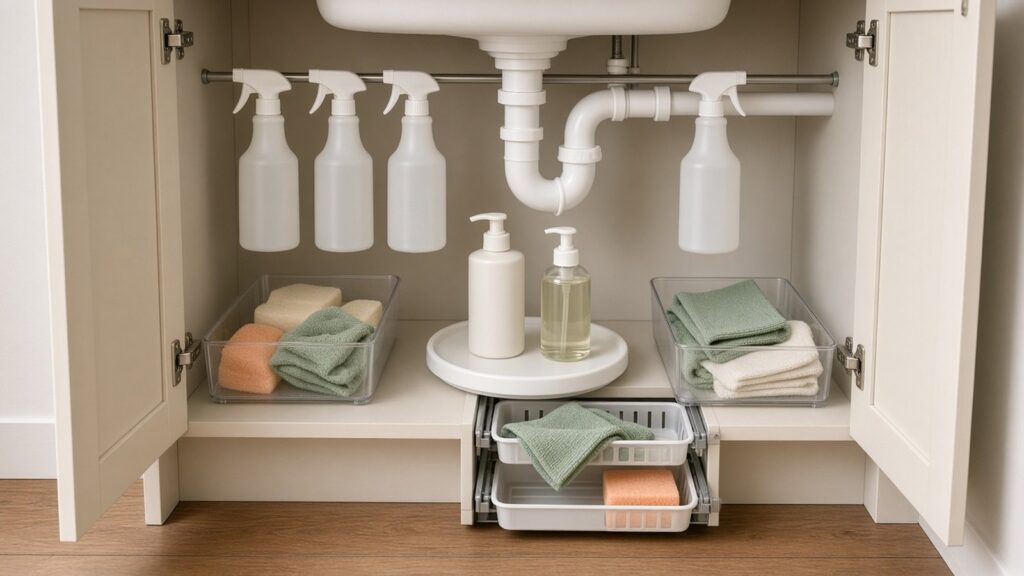
Fit a tension rod across the top of one side of the cabinet and hang spray bottles by their triggers. This frees the entire floor of that side for bins. It costs very little, needs no tools, and is one of the easiest renter-friendly storage hacks in the whole kitchen.
Two-tier sliding organizer
Expandable or two-tier pull-out organizers are designed to fit around pipes. Many have adjustable or removable shelves so you can work around the drain. Pull-out drawers solve the “deep and dark” problem because the back of the cabinet slides out to you. If one side of your pipes leaves at least 12 inches of width, a low no-drill pull-out such as this adhesive-mount SpaceAid organizer (17 inches deep, width adjusts from about 12 to 19.6 inches) turns that side of the cabinet floor into a slide-out drawer.
Clear, open-top bins
Use narrow, open-top bins with handles to group similar items: one for dishwasher supplies, one for sponges and brushes, one for backstock. Handles let you pull a whole category out at once. Clear bins show you what is running low, and open tops mean you can grab items with one hand.
A carry caddy for cleaning supplies
Keep your all-purpose spray, a microfiber cloth, and a scrub brush in a single caddy. When it is time to clean, you take the caddy with you instead of making trips back and forth. It pairs well with a short 15-minute daily cleaning routine, because everything you need is in one place.
Turntable for bottles
A small lazy Susan in a back corner keeps tall bottles from hiding behind each other. A quick spin brings the back row to the front.
Over-the-cabinet-door hooks and racks
Slim hooks or baskets that hang over the cabinet door can hold rubber gloves, a scrub brush, or a roll of trash bags. Check that they do not hit the pipes or the sink basin when the door closes, and keep the load light so the hinges are not strained.
Trash bag dispenser
Store the trash bag roll in a small box or dispenser on the door or the side wall of the cabinet so you can pull one bag at a time. It saves floor space and stops the roll from rolling away into the back corner. A bamboo 2-in-1 trash bag and grocery bag holder can hang over the cabinet door with its included hangers; it is about 10 inches square and 5.5 inches deep, so check that it clears the pipes when the door closes.
Safety First: What to Keep (and Not Keep) Under the Sink
Good under sink kitchen organization is also about safety:
- Use child safety latches if young children or pets live in or visit your home, and consider moving strong chemicals to a high shelf instead.
- Never store food here. Keep snacks and pantry items away from cleaning chemicals. If you need more food storage, see our guide on how to organize a small pantry without shelves.
- Keep products in their original, labeled containers. If you decant, label clearly with the product name.
- Do not store products that should not be mixed in an open bin together. Bleach and ammonia-based cleaners, for example, should never be combined.
- Leave access to the shut-off valves. You should be able to reach the water shut-off valves quickly without unloading the cabinet.
Under Sink Organization Checklist
- ☐ Cabinet emptied and checked for leaks or damp spots
- ☐ Base wiped clean and fully dry
- ☐ Expired, empty, and duplicate products removed
- ☐ Space measured on both sides of the pipes and under the trap
- ☐ Waterproof mat or liner added
- ☐ Zones assigned: dish supplies, cleaning supplies, backstock
- ☐ Vertical storage added (tension rod, sliding organizer, or stacking drawers)
- ☐ Daily items in front, rarely used items at the back
- ☐ Shut-off valves easy to reach
- ☐ Child safety latch installed if needed
Common Mistakes to Avoid
- Buying organizers before measuring. Many units are wider than the space beside the pipes. Measure first, then shop.
- Using closed boxes with lids. Lids add a step, and lidded boxes trap moisture. Open-top bins are easier and air out faster.
- Filling every inch. A packed cabinet makes it hard to spot leaks and reach the shut-off valves. Leave some breathing room.
- Storing bulk backstock here. Keep one spare of each product under the sink and put the rest in a closet or utility area.
- Ignoring the doors. The inside of the doors is free vertical space for light items, as long as nothing hits the pipes.
- Skipping the liner. A small drip can damage the cabinet floor over time. A mat is an inexpensive layer of protection.
Keeping It Organized
Once it is set up, the cabinet stays tidy with very little effort. Put things back in their zone right after you use them, wipe up drips when you see them, and do a two-minute check once a month: toss empties, move a spare forward, and look for any signs of moisture. When you buy a new cleaner, decide where it goes before it enters the cabinet, or replace something you already have.
If you also have a bathroom vanity that needs the same treatment, many of these ideas carry over; our list of small bathroom storage ideas without drilling covers the bathroom version.
FAQ: Under Sink Kitchen Organization
How do I organize under my kitchen sink with a garbage disposal?
Treat the disposal as a fixed obstacle and organize the two sides around it. Use narrow bins or a slim pull-out organizer on each side, and keep the area directly around the disposal clear so you can reach its reset button and the electrical connection. Hang sprays on a tension rod above one side to save floor space.
What should you not store under the kitchen sink?
Avoid storing food, pet food, paper goods that can be damaged by moisture, and anything flammable or very hazardous. Keep only a small amount of cleaning supplies here, in their original labeled containers, and use a child safety latch if kids are around.
How do I keep the cabinet under my sink from getting wet?
Fix any leaks first, then add a waterproof mat or liner with raised edges. Wipe off bottles before putting them back, keep wet sponges on the counter to dry (a small quick-dry sink caddy gives them a spot) rather than inside the cabinet, and check the pipe connections during your monthly reset.
What is the best under sink organizer for a small kitchen?
For a small or narrow cabinet, an adjustable two-tier sliding organizer that fits around the pipes usually gives you the most usable space. Combine it with a tension rod for spray bottles and one or two open-top bins, and you have covered most needs without crowding the cabinet.
A Cabinet That Works for You
Under sink kitchen organization does not need a big budget. Empty the cabinet, check for leaks, edit down to what you actually use, line the base, and split the space into clear zones around the pipes. Add a tension rod, a sliding organizer, or a few open bins, and the most awkward cabinet in your kitchen becomes one of the easiest to use. If you live in a small apartment, our studio apartment organization ideas on a budget show how to bring the same approach to the rest of your home.


Leave a Reply