

This post may contain affiliate links. If you buy through them, we may earn a small commission at no extra cost to you. Learn more
A room by room decluttering checklist works because it turns one overwhelming job into a series of small, finished spaces. Start with the room you walk through most (usually the entryway or kitchen), give each room one short time box, and sort everything into four baskets: keep, donate, relocate, and trash. Finish one room completely, deal with the donate pile the same week, then move to the next room on the list.
This guide gives you the order to declutter room by room, a short checklist for every room, and simple rules for what to do with the piles you make. If you want a long list of specific items to toss, keep the 50 things to throw away today list open next to this one.
Where to Start Decluttering (and Why Order Matters)
Most people stall because they start in the hardest room: the garage, the storage closet, or a box of old photos. Those spaces need decisions you have not practiced yet. A better order goes from high-traffic and low-emotion rooms to low-traffic and high-emotion ones, so each finished room gives you momentum and a little more free space to work with.
Here is the order this checklist follows:
- Entryway – small, used every day, and a quick visible win.
- Kitchen – lots of duplicates and expired items, very few hard decisions.
- Living room – shared surfaces that collect everyone’s things.
- Bedroom and closet – more personal, but you will have practice by now.
- Bathroom – small and fast, mostly expiration dates.
- Kids’ rooms and home office – involve other people or paperwork.
- Storage spaces – garage, basement, hall closets, and under the bed, saved for last because everything you relocate ends up here.
Skip a room if it is already in good shape, and move a room earlier if it bothers you every day. The order is a default, not a rule.
The Four-Basket Method: Keep, Donate, Relocate, Trash
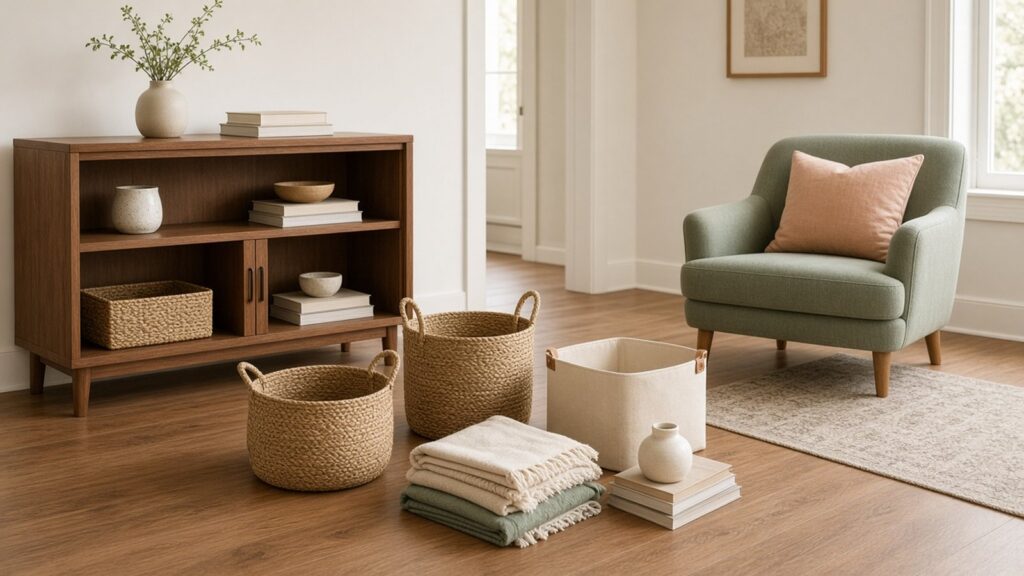
Before you open a single drawer, set out four containers. Laundry baskets, tote bags, or cardboard boxes all work. Every item you pick up goes into one of them, and nothing goes back on the shelf until the session ends.
- Keep – you use it, it works, and it belongs in this room.
- Donate – clean, working, and useful to someone else.
- Relocate – you are keeping it, but it lives in another room. Do not walk it there mid-session; you will get distracted. Empty this basket at the end.
- Trash or recycle – broken, expired, stained, or missing parts.
Add a fifth “decide later” bag only if you get stuck, and set a date to revisit it. If you never opened that bag by the date, most of what is inside can usually go.
Time Boxes: How to Declutter a House Fast Without Burning Out
Speed comes from short, focused sessions, not marathon weekends. Set a timer and stop when it rings, even mid-drawer.
- 15 minutes – one drawer, one shelf, or one surface.
- 30 minutes – a small zone such as the entry bench or the bathroom vanity.
- 60-90 minutes – a full small room, including emptying the relocate basket.
Two or three sessions a week will move you through a typical apartment in a few weeks. If you would rather follow a dated, one-task-a-day calendar, the 30-day January home reset is built for that.
Room by Room Decluttering Checklist
Work through each room’s list top to bottom. Each list is meant to fit into one or two time boxes. Tick off the line once the item type is sorted, not once every single object is perfect.
1. Entryway
- Shoes: keep only pairs worn this season by the door; relocate the rest.
- Coats and bags on hooks: one or two per person, extras go to the bedroom closet.
- Mail and paper: recycle junk mail, move bills to wherever you handle paperwork.
- Keys, sunglasses, reusable bags: give each one a fixed spot.
- Clear the floor completely so you can see what is left.
If your entry has no closet at all, the entryway with no closet guide has layout ideas for hooks, benches, and shoe storage.
2. Kitchen
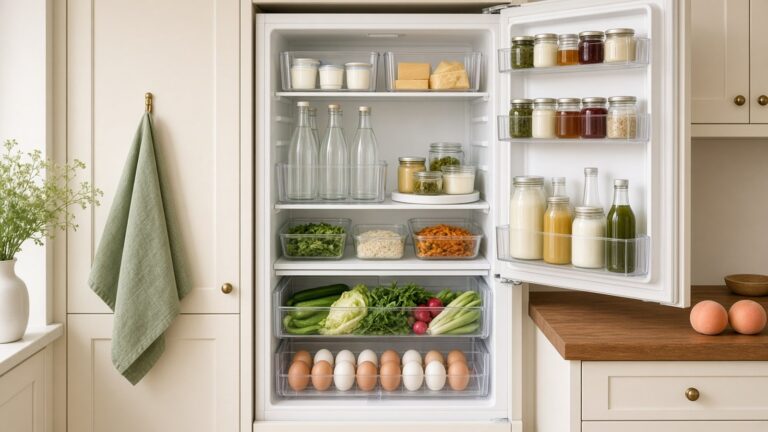
- Pantry and fridge: expired food, stale snacks, and spices you cannot smell anymore.
- Duplicates: extra spatulas, can openers, measuring cups, and mugs.
- Food storage containers without matching lids.
- Small appliances you have not used in a year: donate or relocate to storage.
- Countertops: keep only what you use daily; everything else gets a cabinet spot.
Once the kitchen is pared down, the small kitchen organization ideas post shows where things can go.
3. Living Room
- Coffee table and side tables: clear them fully, then put back only what you use there.
- Books, magazines, and media you will not reread or rewatch.
- Throw blankets and pillows: keep a reasonable number, donate worn extras.
- Cables, chargers, and remotes for devices you no longer own.
- Decor: keep pieces you like and have room for, not everything you were given.
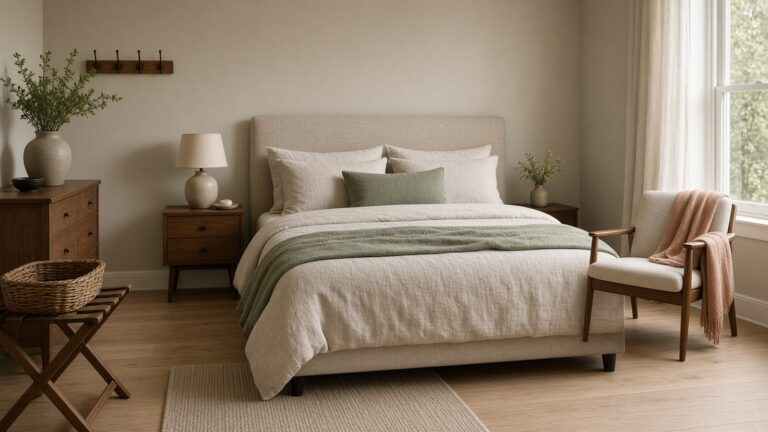
4. Bedroom and Closet
- Nightstand: one drawer’s worth of essentials; relocate the rest.
- Clothes that do not fit, need repairs you will not make, or have not been worn in a year.
- Socks and underwear with holes or no partner.
- Extra hangers, dry-cleaning bags, and shoe boxes.
- Bedding: keep two sets per bed, donate the extras to an animal shelter if they accept linens.
For what you keep, file folding frees up a surprising amount of drawer space, and zip-up drawer organizers in a few sizes stop socks and underwear from drifting into one pile again. Closets with no shelves are covered in the small closet with no built-ins guide.
5. Bathroom
- Expired medicine, sunscreen, and makeup (check the dates on the label or packaging).
- Hotel samples and almost-empty bottles: use them up this week or toss them.
- Old towels: keep enough for each person plus guests, donate the rest.
- Hair tools and accessories you no longer use.
- Under the sink: cleaning products you have duplicates of.
Ask your pharmacy or local waste service how to dispose of old medicine rather than flushing it. For a small space, the small bathroom storage ideas without drilling post has storage options for what remains.
6. Kids’ Rooms and Home Office
- Toys: broken ones, puzzles with missing pieces, and anything outgrown. Involve kids old enough to choose.
- Clothes and shoes that no longer fit: bag them by size for donation or hand-me-downs.
- Art and school papers: keep a few favorites in one folder or box per child.
- Desk: dried-out pens, old notebooks, and cables for retired devices.
- Paperwork: shred what you do not need; keep important documents in one labeled file.
7. Storage Spaces
- Hall and linen closets: expired supplies, worn linens, and duplicate tools.
- Garage or basement: paint you will not use, broken equipment, and empty boxes.
- Under the bed: anything you forgot you had is a likely donate.
- Seasonal decor: keep what fits in your storage containers, not more.
- Empty the relocate baskets from every other room here last, and give each item a labeled home.
For what you keep, fabric storage cubes turn open shelves into tidy, closed storage, and the under-bed storage ideas post explains how to measure before you buy bins.
What to Do With the Donate Pile
A donate bag that sits in the hallway for a month is just clutter in a new spot. Treat it as part of the job:
- Put the bags straight into your car trunk or by the front door, not back in a closet.
- Pick a drop-off day before you start, ideally the same week.
- Check what your local donation center accepts; many will not take stained clothing, car seats, or older electronics.
- Sell only higher-value items, and give yourself a deadline. Anything unsold by then gets donated.
- Take electronics, batteries, and paint to the drop-off your city or county lists for them.
- Offer usable leftovers on a local buy-nothing or neighborhood group.
How to Declutter Your Home Room by Room and Keep It That Way
Once a room is done, small habits keep it done. A short daily reset, like the 15-minute daily cleaning routine, puts things back before they pile up, and a weekly house cleaning schedule gives every room a regular check. Two simple rules also help: when something new comes in, something similar goes out, and every item you keep needs a home you can name.
Repeat the full checklist once or twice a year. The second pass is much faster because most decisions are already made.
Common Mistakes
- Starting with sentimental items. Photos and keepsakes are the hardest decisions. Leave them for last, after you have built the habit.
- Buying storage first. Declutter, then measure, then buy. Otherwise you end up organizing things you would have donated.
- Pulling everything out of every room at once. You end up with a bigger mess and no finished space. One room, one time box.
- Walking items to other rooms mid-session. Use the relocate basket and empty it at the end.
- Decluttering other people’s things. Sort your own items and shared spaces; let family members decide on their own belongings.
- Letting the donate pile linger. Schedule the drop-off before you begin.
FAQ
What room should I declutter first?
Start with a small, high-traffic room that holds few sentimental items, usually the entryway or the kitchen. You see the result every day, which makes it easier to keep going with the next room.
How do I declutter my house when I feel overwhelmed?
Shrink the task. Set a 15-minute timer, pick one drawer or one surface, and sort it into keep, donate, relocate, and trash. Stop when the timer ends. Short finished sessions add up faster than one big day that never happens.
How long does it take to declutter a house room by room?
It depends on the size of your home and how much you own. A small room often takes one or two 60-minute sessions; storage spaces and kids’ rooms usually take longer. With two or three sessions a week, many people get through a small apartment in a few weeks.
Should I declutter or deep clean first?
Declutter first. Cleaning is faster when shelves and floors are clear, and you will not waste time cleaning around things you are about to donate. Wipe each shelf or drawer as you empty it, then do the bigger cleaning once the room is sorted.
One Room at a Time
You do not need a free weekend or a perfectly empty house. Pick the first room on the list, set out four baskets, set a timer, and finish one small space today. Next session, take the next room. That is the whole system.



Leave a Reply