Search “tea table setup” and you’ll find photos with a dozen items laid out with precision — a drainage tray, tea pick, tea tweezers, a scoop, a pitcher, a timer, a smelling cup, sometimes even a small brush. It’s easy to look at that and assume all of it is required to brew tea properly. Almost none of it is. Here’s an honest split between what actually affects how your tea turns out and what’s there mainly to look good in photos.
What You Actually Need
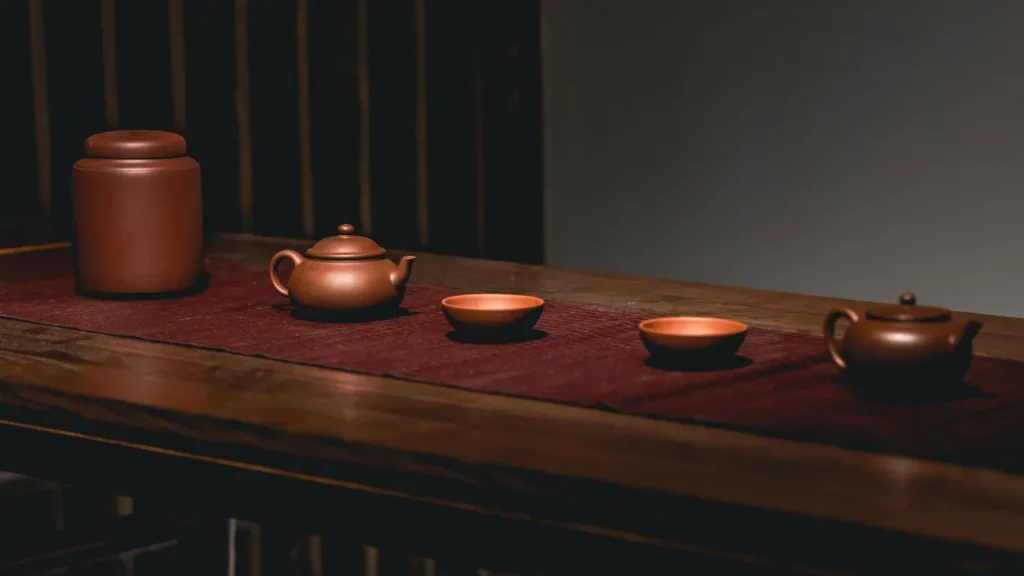
A brewing vessel. A gaiwan or a small teapot. This is the one genuinely non-negotiable item — everything else in a tea setup exists to support this single piece.
A cup (or two). Something to drink from. It doesn’t need to match your gaiwan, be a specific size, or come from a specific region. Any cup that holds a reasonable amount of liquid and doesn’t retain too much heat works fine.
A way to catch spills. This is the only “extra” that earns a firm place on the essential list, and it’s more about your table than your tea. Gongfu-style brewing involves a fair amount of pouring, rinsing, and occasional overflow — a simple tray, mat, or even a folded towel under your gear saves you from constantly wiping down the surface.
Something to measure leaves, even roughly. You don’t need a precision scale, but eyeballing leaf quantity consistently (a spoon you always use, for instance) helps you actually learn what a given amount of leaf does to flavor and strength. Without some consistency here, you can’t tell whether a bad cup was the tea, the water, or just guesswork on quantity.
That’s the complete essential list. Four items, and two of them you probably already own in some form.
What’s Genuinely Useful, But Not Required
These aren’t essential, but they solve real, specific problems — worth adding once you know you’ll use them regularly, rather than buying upfront.
A pitcher (fairness cup). When you’re pouring for more than one person, a pitcher lets you combine all the tea before distributing it into cups, so everyone gets the same strength instead of the first cup being weaker than the last. If you brew solo most of the time, this solves a problem you don’t actually have yet.
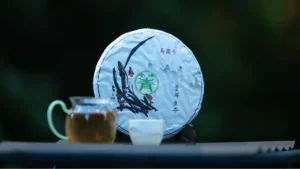
Tea tweezers or a pick. Useful for handling hot, wet leaves without touching them directly, or for breaking apart compressed pu-erh cakes. Genuinely handy, but easily substituted with a butter knife or your fingers (carefully) until you’re brewing often enough to want a dedicated tool.
A simple timer. Helpful for consistency across infusions, especially while you’re still calibrating your own sense of steeping time. Any phone timer does this job identically to a dedicated tea timer — the dedicated version isn’t functionally better, just more aesthetically matched to the rest of the setup.
What’s Mostly Aesthetic
None of these change how your tea tastes. They’re part of the tradition and can genuinely make the ritual feel more complete once you’re deeper into it, but a beginner skipping all of them loses nothing in the cup.
- A smelling cup (a tall, narrow cup used specifically to appreciate aroma before drinking from a separate wider cup) — a nice ritual addition, but the aroma is still there without it.
- A dedicated tea brush, used to clean and “season” a tea table or clay teapot over time — a maintenance ritual more than a functional necessity for someone just starting out.
- Matching sets where every piece shares the same glaze or design — visually cohesive, but a mismatched collection of pieces you actually like using works exactly as well.
- A full wooden tea table with built-in drainage, as opposed to a simple tray — genuinely nice to have if you’re brewing often and want a dedicated setup, but a tray accomplishes the same core function at a fraction of the cost and space.
A Simple Way to Decide What to Add Next
Rather than buying a full “starter kit” upfront, a more sustainable approach: notice what you find yourself wishing you had during an actual brewing session, then get that specific thing. If you keep wishing you could pour evenly for guests, get a pitcher. If you keep struggling to handle a hot, opened pu-erh cake, get tweezers. Buying based on an actual, repeated friction point means everything you add earns its place, instead of sitting unused because it looked essential in a photo.
If you haven’t chosen your first tea yet, begin with our guide to Chinese tea for complete beginners before buying teaware.
The Bottom Line
A functional tea setup is smaller than it looks online — a vessel, a cup, something to catch spills, and a rough way to measure leaves. Everything past that is either solving a specific problem you may not have yet, or adding to the ritual’s atmosphere without changing what’s actually in your cup. Both are worth having eventually if you love the practice — just not on day one.
If you’re still deciding on your first brewing vessel, our guide on best budget gaiwan sets for beginners covers what actually matters at a low price point.