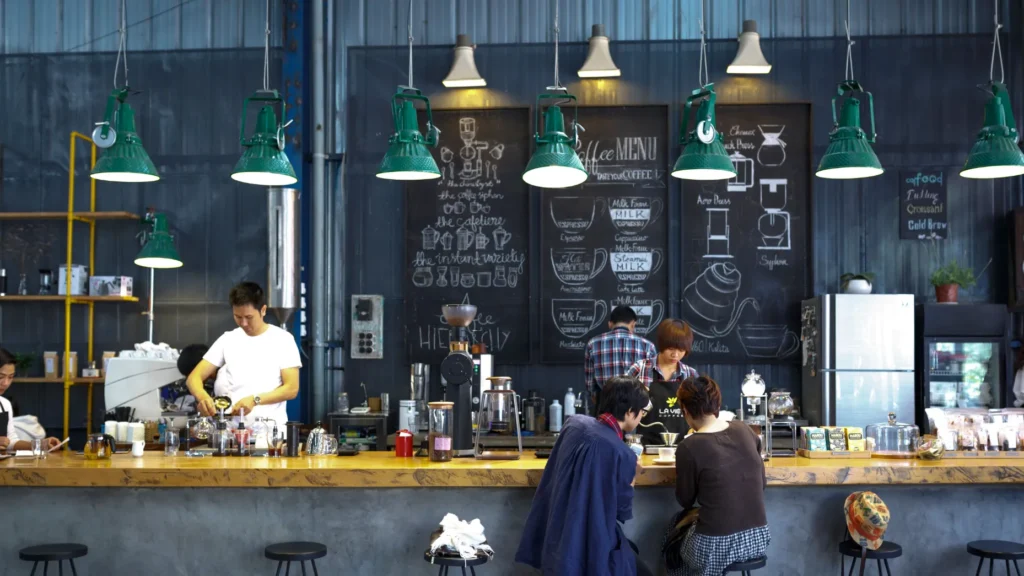
Walk into almost any specialty coffee shop and you’ll see the word “ritual” somewhere — on the menu, on a chalkboard, in the copy on a bag of beans. Coffee culture has fully embraced the language of ritual over the last decade or so: pour-over as meditation, the “art” of the perfect shot, slow mornings built around a cup. As someone who spends a lot of time thinking about tea and the actual mechanics of ritual, I think a lot of this coffee-shop framing gets something backwards, and it’s worth naming what.
Ritual Language Isn’t the Same as Ritual Structure
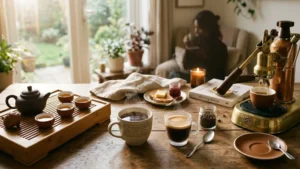
Here’s the core issue: calling something a ritual doesn’t make it one. A ritual, in any tradition — tea included — isn’t defined by vocabulary or aesthetic. It’s defined by repeated structure that shapes attention. Gongfu tea is a ritual not because someone calls it one, but because the small cups, the repeated infusions, and the deliberate pacing physically force you to slow down and pay attention, whether you intend to or not.
A lot of coffee shop “ritual” language describes the opposite: a genuinely fast, transactional experience — order, wait, grab, leave — dressed up with words like “craft” and “ritual” without any of the structural elements that would actually produce that effect. The words are doing marketing work, not ritual work.
Where Coffee Culture Actually Gets This Right
To be fair, this isn’t universal, and it’s worth pointing to where the ritual framing genuinely holds up. A traditional Italian espresso bar, for instance, has real structural ritual built in — you order at the counter, you drink standing, in a few focused seconds, and then you leave. It’s compressed rather than slow, but it has an actual enforced structure that shapes how you experience the coffee. Nobody’s scrolling a phone while pulling a shot at the bar; the format itself doesn’t allow for that kind of divided attention.
Home pour-over, done properly, can have real ritual structure too — the timing, the pouring technique, the attention required to do it well genuinely does slow a person down, in the same functional way gongfu tea does, just compressed into a few minutes instead of stretched across many.
The distinction isn’t “coffee vs tea.” It’s structure vs language — some coffee traditions have earned the word “ritual” through actual repeated, attention-demanding practice. A lot of commercial coffee shop branding just borrows the word without the substance behind it.
The Giveaway: Ritual Language Paired With Speed-Optimized Design
The clearest tell, from a tea drinker’s perspective, is when a coffee shop leans hard on ritual language while everything about the physical experience is optimized for the opposite — mobile ordering so you never have to wait, drive-through windows, oversized to-go cups built for consumption on the move, loyalty apps designed to get you in and out as fast as possible.
None of that is a criticism of convenience itself — convenience is a legitimate thing to want from your daily coffee. The issue is specifically the mismatch: calling a maximally efficient, on-the-go transaction a “ritual” empties the word of what it’s supposed to mean. A ritual, by definition, asks something of you — your time, your attention, your willingness to slow down for it. A system built entirely to remove friction can’t also be a ritual in any meaningful sense, no matter what the cup says.
What Tea Culture Might Actually Offer Coffee Culture Here
This isn’t really about tea being superior — it’s about a useful distinction tea culture makes clearly, that coffee marketing has started to blur. Gongfu tea doesn’t advertise itself with the word “ritual” nearly as often as coffee shops do, mostly because it doesn’t need to — the repeated infusions and unavoidable slowness make the point on their own, without a chalkboard sign announcing it.
If coffee culture wants to genuinely earn the word rather than just use it, the answer isn’t more copy about craftsmanship — it’s building in actual structural friction that asks something of the person drinking it. A five-minute pour-over you have to sit with while it’s made does that. A ritual-branded app that gets your usual order to you in ninety seconds doesn’t, regardless of the language wrapped around it.
The Bottom Line
“Ritual” is a word that has to be earned through structure, not applied through branding. Some coffee traditions genuinely have that structure built in; a lot of commercial coffee culture has just borrowed the vocabulary without the substance. Tea culture’s version of this — gongfu cha’s repeated, unhurried infusions — offers a useful comparison point precisely because it doesn’t need to say the word out loud. The structure does the talking on its own.
If this contrast interests you, our earlier piece on gongfu tea vs espresso ritual looks at where these two traditions actually do share common ground, rather than where they diverge.