It’s a common, quietly disappointing experience: you buy a genuinely good tea, love it for the first few sessions, and then a month or two later it tastes flat and forgettable — not bad exactly, just less. The tea didn’t go bad in the way food spoils. It lost its flavor because of how it was stored, and that’s almost always fixable with a few basic habits.
The Four Things That Damage Tea Over Time
Tea doesn’t have a single point of “expiration” the way perishable food does, but it does degrade steadily when exposed to the wrong conditions. Four factors do almost all of the damage:
1. Light. Direct sunlight, and even prolonged exposure to regular indoor light, breaks down the compounds responsible for tea’s aroma and flavor. This happens gradually, which is part of why it’s easy to miss — the tea doesn’t look any different, it just tastes progressively duller.
2. Air. Oxygen continues to interact with tea leaves after they’re processed, slowly oxidizing them further over time. For green and lightly oxidized teas especially, this ongoing oxidation is exactly what mutes the fresh, vibrant character that made the tea appealing in the first place.
3. Moisture. Tea is highly absorbent, and humidity is one of the fastest ways to ruin it — not just through flavor loss, but through the risk of mold in genuinely damp conditions. Even moisture short of visible mold can flatten flavor and introduce a stale, papery quality.
4. Strong odors. This one surprises people the most. Tea leaves absorb surrounding smells easily, which means storing tea near coffee, spices, or anything strongly scented can quietly transfer those odors into the tea itself. A tea stored in a cupboard next to ground coffee can genuinely start to taste faintly of coffee within a few weeks.
How to Actually Store Tea Well
The fixes map directly onto the four problems above, and none of them require anything specialized:
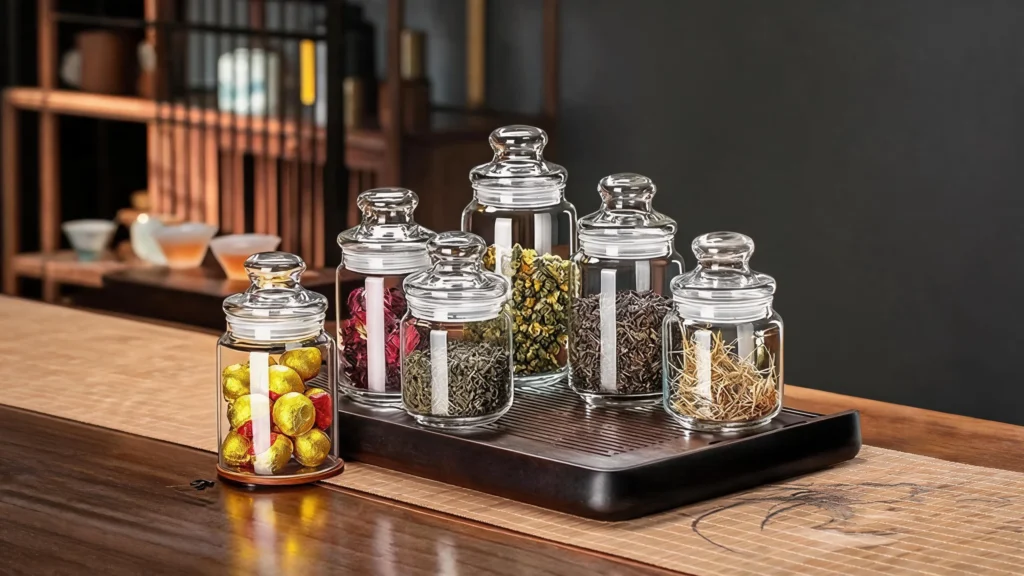
- Keep it in an opaque container. Clear glass jars look appealing on a shelf, but they let light reach the leaves constantly. A ceramic, tin, or opaque container protects against this with zero extra effort.
- Seal it properly between uses. A container with a tight-fitting lid limits ongoing air exposure far more than a loosely folded bag clipped shut. This matters more than people expect — a bag that’s technically “closed” but not actually sealed barely slows oxidation at all.
- Store it somewhere cool and dry, away from steam-producing areas like directly above a stove or right next to a sink. A cupboard or drawer at normal room temperature is fine; you don’t need refrigeration, and in most cases you shouldn’t use it (more on that below).
- Keep it away from anything strongly scented. Store tea separately from coffee, spices, and even other strongly aromatic teas if possible. If cupboard space is tight, at minimum keep tea in a well-sealed container rather than loose on a shelf near other ingredients.
A Common Mistake: Refrigerating or Freezing Tea
This one deserves its own mention because the instinct is understandable but usually backfires. Refrigerators and freezers are humid environments full of competing odors — exactly the two things you’re trying to protect tea from. Every time you take tea out of the fridge, condensation can form on the cold leaves as they warm up to room temperature, introducing moisture directly onto the tea.
The exception is very delicate green teas in a controlled environment (some serious tea drinkers do use a dedicated, well-sealed container specifically for short-term cold storage of very fresh green tea), but for the vast majority of teas and storage situations, room temperature in a proper airtight, opaque container is simpler and safer.
How Long Different Teas Actually Last
Storage life varies by tea type, and it’s worth setting realistic expectations rather than assuming all tea behaves the same way:
- Green and lightly oxidized teas are the most fragile and are best enjoyed within about 6–12 months of purchase, even with good storage.
- Black teas are more oxidation-stable and generally hold their character well for 1–2 years.
- Well-compressed pu-erh is the outlier — it’s designed to change and often improve with age over years, given proper storage conditions, rather than degrade the way other teas do.
The Bottom Line
Tea doesn’t need elaborate storage equipment to stay good — it needs protection from four specific things: light, air, moisture, and strong odors. An opaque, well-sealed container kept somewhere cool and away from other strong smells handles almost all of it. The tea you bought a month ago and the tea sitting in that container right now can taste like two different things, and the difference usually comes down to nothing more than where it’s been sitting.
Once your tea is stored properly, the next question is often how to build a dedicated space for it — our minimalist guide to starting a home tea corner covers exactly that.