A common assumption when people start shopping for a gaiwan is that price maps directly to quality — that a $15 gaiwan must be a compromise compared to a $60 one. For a beginner, that’s mostly backwards. At the budget end of the market, the differences that actually matter aren’t about prestige or craftsmanship — they’re about a handful of practical features that make the learning curve easier. Here’s what to actually look for, and what you can safely skip paying extra for.
What Actually Matters Under $30
1. Wall thickness. This is the single most important feature for a beginner, and it has nothing to do with price tier — plenty of budget gaiwans get this right. Thicker porcelain walls hold heat a bit longer before it transfers to your fingers, which buys you the extra second or two of margin you need while you’re still building the grip and pour technique. Thin, delicate-walled gaiwans might look more refined in photos, but they’re genuinely harder to use starting out, regardless of price.
2. Lid design. Some budget gaiwans are built with what tea drinkers often call an “easy” style — a slightly different lid shape and rim that lets you pour without needing to tilt the lid at a precise angle to control the gap. This style tends to be more forgiving for someone who hasn’t developed the muscle memory yet, and it’s just as common in the budget tier as anywhere else.
3. Capacity in the 90–130ml range. Don’t be tempted by a larger gaiwan because it looks like better value per dollar. Anything much bigger than 130ml gets harder to control at a beginner skill level — it holds more heat, takes more leaf per session, and is more awkward to pour cleanly in one motion. A smaller gaiwan also happens to be cheaper, so budget and beginner-friendliness point in the same direction here.
4. Plain, neutral porcelain over glass. Glass gaiwans look appealing because you can watch the leaves unfurl, but they conduct heat differently than porcelain and can actually be harder on your fingers, not easier. For a first gaiwan, simple white or plain porcelain is the safer choice — it’s also almost always the cheapest option, which works in your favor at this budget.
What You Can Safely Skip Paying For
- Hand-painted decoration or glaze artistry. This adds cost without adding function. A plain gaiwan performs identically to a decorated one.
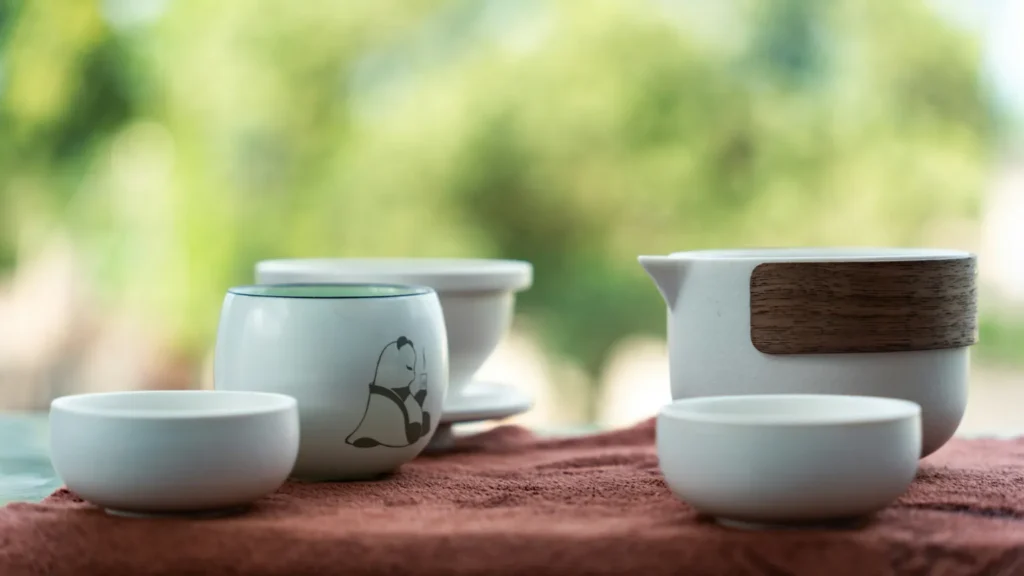
- Matching cup sets bundled in. Many “gaiwan sets” bundle in 4–6 cups to boost the perceived value, but if you’re brewing solo, you likely only need one or two cups. Buying the gaiwan alone, or with just one or two cups, is often cheaper than a full bundled set.
- Branded or “master-crafted” labeling. At this price point, these labels rarely reflect meaningfully different materials or construction — they’re marketing language more than a functional difference.
A Simple Checklist for Shopping at This Budget
When you’re actually comparing listings, run through this quickly:
- Is it plain porcelain (not glass, not clay)?
- Is the capacity between 90–130ml?
- Does the listing mention or show a slightly thicker wall, or an “easy pour” / beginner-style lid?
- Is the price closer to $12–$20 than $30? (At this end of the market, you’re rarely paying for anything beyond basic materials and shipping, so there’s little reason to spend right up to the $30 ceiling unless a specific set includes something you actually need, like a small tray.)
If a listing checks most of these boxes, it’s very likely a solid choice for a first gaiwan — the differences between two plain porcelain gaiwans that both meet this checklist are genuinely minor.
Where to Look
Amazon and dedicated tea retailers both carry gaiwans in this range regularly, though specific listings and prices shift often enough that naming individual products here would go stale quickly. When you’re browsing, search directly for terms like “porcelain gaiwan beginner” or “easy pour gaiwan” and run the checklist above against whatever comes up — that’ll get you to a solid option faster than chasing a specific “best of” list that may no longer be current by the time you read it.
The Bottom Line
At the budget end, you’re not choosing between “good” and “cheap” — the features that make a gaiwan easier to learn on (wall thickness, forgiving lid design, moderate capacity) are the same features that keep the price low. Spend your money on getting those basics right, and save the decorative or collector-grade pieces for later, once you know what you actually like brewing.
Once you’re comfortable with the basic grip and pour, our guide on how to brew tea in a gaiwan without burning your fingers covers the technique that makes any budget gaiwan easier to use.
After choosing your first set, follow our complete beginner’s guide to using a gaiwan for a simple first session, brewing ratios, temperatures, and step-by-step pouring instructions.