
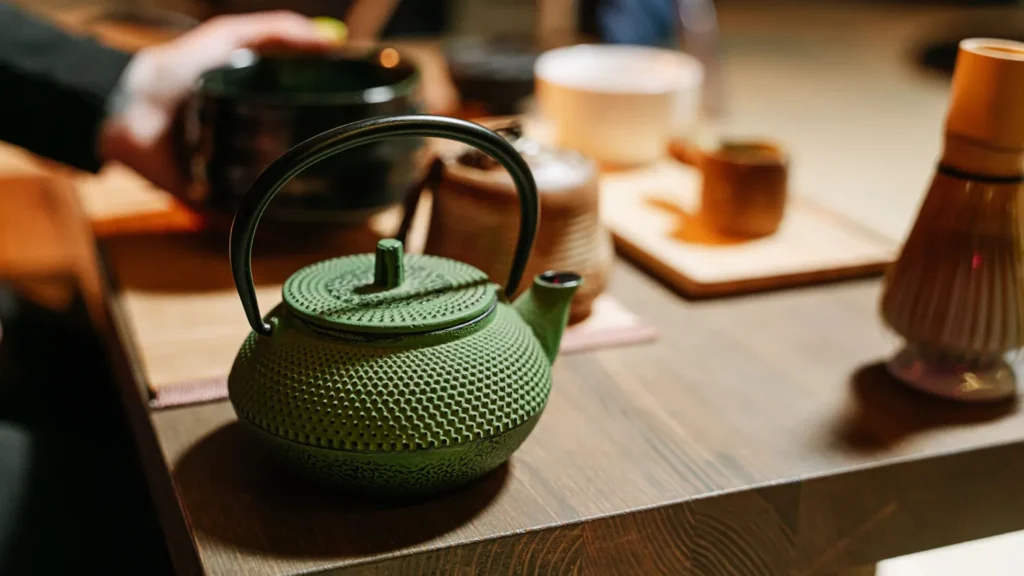
Search “home tea corner” and you’ll mostly find elaborate setups — full tea tables, drainage trays, a dozen matching cups, shelves of labeled tins. It’s beautiful, but it can also make the whole idea feel out of reach if you don’t have a spare room or a few hundred dollars to spend upfront. None of that is actually required. A tea corner can be a single shelf, a tray on a counter, or one corner of a desk — the point isn’t the amount of stuff, it’s that the space is deliberately set aside for one thing.
What a Tea Corner Is Actually For
Before getting into what to put in it, it’s worth being clear about the purpose: a tea corner isn’t a display case, it’s a cue. When a space is set up specifically for tea and nothing else, it makes it easier to actually slow down and make a cup properly instead of absentmindedly dunking a bag into a mug at your desk while doing three other things.
The minimalist version of this works because it removes the two biggest barriers people run into: cost and space. You’re not building a shrine — you’re building a small, repeatable habit.
The Bare Minimum You Actually Need
You can start a tea corner with four things:
- One brewing vessel. A single gaiwan is enough — it’s compact, versatile across most tea types, and doesn’t require the extra step of picking “the right pot” for each tea. If you’re still getting comfortable with the technique, our guide on how to brew tea in a gaiwan without burning your fingers covers the basics.
- One or two cups. You don’t need a full set. Two small cups — one for you, one for a guest — cover almost every situation a home tea corner needs to handle.
- A small tray or mat. This does double duty: it catches spills, and it visually defines the space as “the tea area” even if it’s just one corner of a shelf.
- A little bit of tea you actually like. Not five kinds “in case.” One or two teas you reach for regularly is a better foundation than a drawer of samples you never get to.
That’s genuinely the whole list. Everything past this point is optional refinement, not requirement.
Where to Put It, Even in a Small Space
You don’t need a dedicated room, or even a dedicated piece of furniture. A few realistic options:
- A corner of a kitchen counter, with the tray tucked to one side so it doesn’t interfere with regular cooking space.
- One shelf of a bookcase, low enough to reach the gaiwan and cups without pulling out other books.
- A tray on a desk or side table that gets fully put away after use — the “corner” doesn’t need to be permanent to still function as a ritual space, as long as the setup routine itself is consistent.
The common thread is that the space is small, intentional, and reserved for tea specifically — not a catch-all surface that happens to have a tea set sitting on it among other clutter.
Resisting the Urge to Over-Collect Early
This is probably the single most common way a minimalist tea corner turns into a cluttered one: buying “just one more” cup, pot, or tin because it’s beautiful, before you actually know what you like.
A more sustainable approach is to let the corner grow slowly, based on things you’ve actually used and wanted more of — rather than filling it out all at once based on what looks good in photos. If you find yourself reaching for a second gaiwan because you genuinely brew two different tea types regularly, that’s a reason to add one. Buying a second gaiwan because it was on sale isn’t the same thing, and it’s usually the first crack in “minimalist” turning into “cluttered.”
Making the Space Feel Intentional, Not Just Functional
A few small touches go a long way without adding much:
- Keep the surface itself simple — a plain wooden tray or a single piece of woven matting does more for the feel of the space than any number of small ornaments.
- Store extra tea out of sight, even if it’s just in a drawer nearby. Visual clutter from packaging undercuts the calm the space is meant to create.
- Leave it visible, not hidden away. A tea corner tucked inside a cabinet gets used far less often than one you can see from where you sit — visibility itself is part of what makes the habit stick.
The Bottom Line
A home tea corner doesn’t need to look like something out of a tea house to do its job. The version that actually gets used regularly is usually the smallest, simplest one — one gaiwan, one or two cups, a tea you like, and a spot set aside just for that. Everything else can be added later, once you actually know what’s worth adding.
Once your corner is set up, the next question is usually what to actually put in it — our post on Chinese tea culture and why there’s no fixed “ceremony” is a good reminder that there’s no one right way to use the space you’ve built.
Pingback: Why Chinese People Gift Tea (And What It Actually Means) - LifeUpDaily