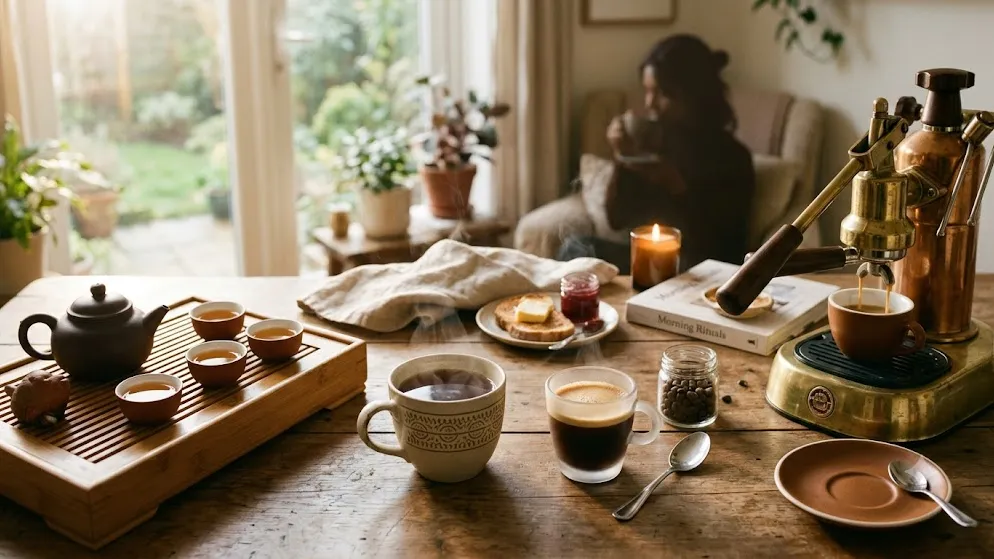
On the surface, these two rituals couldn’t look more different. Gongfu tea is slow, quiet, stretched across many small infusions over half an hour or more. A proper espresso is fast, intense, over in a few sips, often consumed standing at a bar counter in under two minutes. One looks like patience. The other looks like efficiency.
But spend time with people who take either one seriously, and a different picture emerges — both rituals exist to solve the exact same problem: how to force yourself to actually pay attention, in a day that’s otherwise built to rush past everything.
Two Very Different Solutions to the Same Problem
Gongfu tea slows you down through duration. Small cups, short infusions, repeated many times — the ritual stretches a simple act of drinking tea into something that takes real, dedicated time. You can’t rush it without missing the point entirely; the whole method depends on patience.
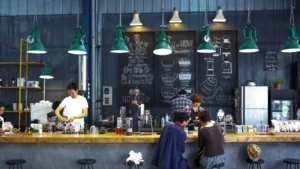
Espresso does the opposite. It compresses attention into intensity instead of duration. A shot is pulled in under 30 seconds and consumed in a few seconds more, but a real espresso ritual — the kind you see in traditional Italian coffee bars — asks for total focus during that brief window. You’re not sipping it while checking your phone. You order it, you drink it standing at the counter, you’re done, and for that short stretch, that shot of coffee is the only thing happening.
Neither ritual is really about the beverage taking a long time or a short time. They’re both about not letting the moment slide past unnoticed, just using opposite methods to get there.
What Both Rituals Are Actually Pushing Back Against
Modern daily life defaults to multitasking. Coffee gets carried around in a to-go cup while walking, answering messages, half-present. Tea gets made in a mug with a bag left in too long, forgotten on a desk, drunk cold two hours later without much notice.
Both gongfu tea and traditional espresso rituals exist as a deliberate correction to that default. They both insist, in their own way, that this particular drink deserves your undivided attention for the short time you’re having it — even if that “short time” is thirty seconds for an espresso or thirty minutes for a full gongfu session.
That’s the real throughline: neither one is really about the drink. They’re about refusing to let one more thing happen on autopilot.
Where the Two Cultures Genuinely Diverge
It’s worth being honest about the real differences too, rather than flattening them into “they’re basically the same thing.”
Gongfu tea is built around repetition and evolution — the same leaves, brewed again and again, changing slightly with every infusion. Part of the ritual’s appeal is watching that gradual shift happen in real time, session after session, sometimes over years as the tea itself ages.
Espresso culture is built around repeatable precision — the goal of a good barista is to produce the exact same excellent shot every single time, with almost no variation. The ritual isn’t about watching something evolve; it’s about a brief, perfected moment you can return to identically, day after day.
One ritual finds meaning in change. The other finds meaning in consistency. Both are valid ways of paying attention — they’re just pointed in opposite directions.
Why This Comparison Is Worth Making at All
It would be easy to treat tea culture and coffee culture as separate worlds that don’t have much to say to each other — one Eastern, one Western, one slow, one fast. But looking at them side by side actually reveals something useful: the impulse to build ritual around a daily drink isn’t unique to one culture. It shows up wherever people decide that a small, ordinary moment deserves to be treated as something more than background noise.
Whichever one you gravitate toward — a full gongfu session with the same leaves steeped a dozen times, or a fast, focused shot of espresso taken standing at a counter — you’re participating in the same basic idea, dressed in different clothes. Slowing down doesn’t have to mean taking longer. Sometimes it just means paying full attention to something brief, instead of letting it happen in the background of something else.
The Bottom Line
Gongfu tea and a proper espresso ritual sit at opposite ends of a spectrum — one stretched out, one compressed — but they’re solving the same problem with different tools. Both are a small, repeated refusal to let a daily ritual become invisible. If you already have one version of that in your life, whether it’s tea or coffee, you already understand the impulse behind the other, even if you’ve never thought about the two side by side.
If tea is your version of this ritual, our post on Chinese tea culture and why there’s no fixed “ceremony” digs into how much room there actually is to make that ritual your own.