

This post may contain affiliate links. If you buy through them, we may earn a small commission at no extra cost to you. Learn more
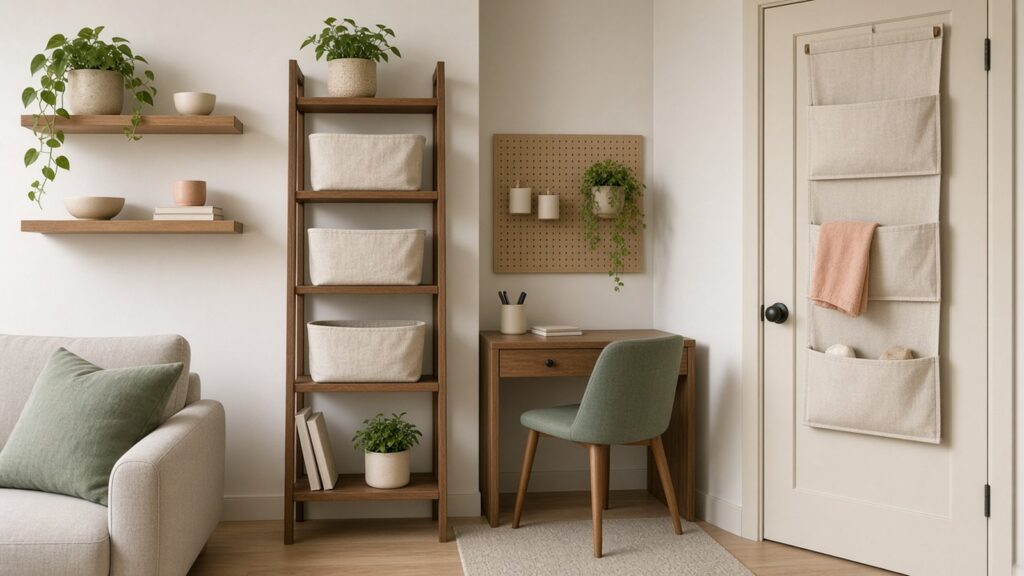
The best vertical storage ideas all follow one rule: stop spreading things across the floor and start stacking them up the wall, behind doors and into the empty space above furniture. In a small apartment, a tall ladder shelf, two floating shelves, a pegboard, an over-the-door organizer and a hanging closet organizer can add more storage than another dresser, without eating floor space. Below are 12 vertical ideas, a quick way to plan a wall, renter-friendly options, and the mistakes that make tall storage look cluttered.
This guide is only about height: walls, doors and the top half of the room. For a full zone-by-zone plan, see our studio apartment organization ideas on a budget, and if you can’t drill at all, our renter-friendly storage hacks go deeper on no-damage tools.
Before You Start: Plan Small Apartment Storage by Height
Before you buy anything, split each wall into three height bands so daily items never end up where you need a step stool.
- Low band (floor to knee): heavy or bulky things: shoes, a laundry basket, the bottom shelf of a ladder shelf.
- Reach band (knee to shoulder): what you use every day: keys, bags, everyday dishes, chargers, the clothes you wear most. Give this band your best storage.
- High band (above shoulder to ceiling): things you use monthly or seasonally: spare bedding, travel bags, holiday decor, backup toiletries. Store them in lidded bins or matching baskets so the top of the room stays calm.
Then measure each usable wall (width, height to the ceiling, door swings, outlets and vents). The space above the sofa, bed or desk is usually the easiest place to start.
12 Vertical Storage Ideas for Small Apartments
Pick the two or three that fit the walls you just measured. You don’t need all twelve.
1. A ladder shelf or tall narrow bookcase in a corner
Corners are dead space in most small apartments. A leaning ladder shelf or a narrow bookcase turns a small footprint into five or six levels of storage. Baskets go on the lower shelves, a plant or a few books on top, so it reads as decor rather than a storage tower. Secure any tall unit to the wall with the anti-tip kit, or use a leaning ladder style that is designed to rest against the wall.
2. Floating shelves above the sofa, desk or bed
The wall above furniture is rarely used. Two or three floating shelves spaced 12 to 15 inches apart give you a home for books, a small speaker, or pretty everyday items. Keep the lowest shelf high enough that nobody hits their head when they sit up or stand. Above a bed, choose shallow shelves and keep heavy or breakable items off them.
3. A pegboard wall over a compact desk
A pegboard is the most flexible wall storage for a work corner: hooks, small shelves and cups can be moved whenever your setup changes. Mount it so the bottom edge sits just above the desk surface and the things you grab daily (headphones, scissors, a notebook) are within arm’s reach while seated.
4. Over-the-door pocket organizers
The back of a door is a ready-made vertical surface. A fabric or clear pocket organizer holds shoes, scarves, cleaning supplies, snacks or toiletries depending on the room. Check that the door still closes fully once the pockets are loaded, and keep the heaviest items in the lower pockets. Over-the-door hooks do the same job for coats and bags; our guide to organizing an entryway with no closet shows how to combine them with wall hooks.
5. Hanging shelves inside the closet
Most closets waste the space between the rod and the floor. A fabric hanging organizer that loops over the rod adds stacked cubbies for sweaters, jeans, towels or bags. The SpaceAid 2 Pack Hanging Closet Organizer is one example: each unit measures 53 inches high, 13.5 inches wide and 11.5 inches deep, and the pack has 12 cubbies in total, so measure your rod height and closet depth first. More closet ideas are in our small closet organization guide.
6. A second rod or a shelf above the closet rod
A closet with one rod usually has empty space above the shelf and below short clothes. Add a high shelf for off-season items, or a hanging double-rod extender for a second row of shirts without tools.
7. Wall and cabinet-door racks in the kitchen
Small kitchens run out of counter space first, so go up. Narrow wall racks or rails hold spices, oils and utensils; the inside of cabinet doors can hold lids, cutting boards or spice jars. The SpaceAid wooden wall mount spice rack (4 pack) is a simple option: each rack is about 11.5 inches long and fits standard jars up to 2 inches across, and it comes with short screws for cabinet doors and longer ones for walls. Check that the door still shuts over the shelf edge. For a pantry without built-in shelves, see how to organize a small pantry without shelves.
8. Slim towers in narrow gaps
Narrow gaps beside the fridge, the washer or the toilet can fit a slim rolling cart or tall narrow shelf for cans, cleaning sprays or toilet paper. Measure the gap before you shop. In the bathroom, an over-the-toilet shelf uses the same idea; our small bathroom storage ideas without drilling cover more options.
9. Hooks and rails at two heights
One row of hooks fills up fast. Two rows at different heights double the space on the same strip of wall: an upper row for long coats or towels, a lower row for bags, kids’ things or dog leashes.
10. A high shelf above the door or window
A single shelf above a doorway or window is perfect for things you use a few times a year. Matching lidded boxes keep it from looking busy.
11. Wall shelves or a storage headboard around the bed
In a small bedroom, a narrow wall ledge beside the bed can replace a nightstand for a lamp, phone and book. Pair it with the space under the bed for bulky items; see our under-bed storage ideas for small bedrooms.
12. Matching bins on tall shelves and cube units
Tall storage only looks calm when the top levels are contained: one bin style per unit, one category per bin. If you have an 11-inch cube organizer, fabric cubes with a clear front window let you see the contents without opening them; the SpaceAid fabric storage cubes measure 10.5 x 10.5 x 11 inches and fold flat when you don’t need them.
Wall Storage Ideas for Renters (No Drilling)
If your lease says no holes, you can still build up. These options leave nothing behind when you move out (always test adhesives on a hidden spot first and follow the weight limit on the package):
- Leaning ladder shelves and freestanding bookcases that rest on the floor (use furniture straps into the existing baseboard or a stud only if your landlord allows it).
- Tension-rod shelving poles that press between floor and ceiling, useful in corners and beside the bed.
- Over-the-door hooks, racks and pocket organizers on bedroom, bathroom and closet doors.
- Removable adhesive hooks and strips for light things like keys, towels and small baskets.
- Tall rolling carts that slide into gaps.
Our renter-friendly storage hacks (no damage) post explains how to remove adhesive hooks cleanly and what to take down before you move out.
How to Set Up a Vertical Storage Wall in an Afternoon
- Pick one wall. Start with the wall you walk past most (entry, desk or kitchen), not every wall at once.
- Clear and sort. Pull everything that will live on that wall into three piles: daily, monthly, rarely. Donate what you don’t use; our decluttering checklist helps here.
- Mark the bands. Use painter’s tape to mark knee and shoulder height so you can see where daily items go.
- Find studs or choose the right anchors. Heavier shelves need studs or anchors rated for the load; light items can use adhesive hooks.
- Install top to bottom so you don’t knock items off lower levels while you work.
- Load and live with it for a week. If you keep reaching for something on the high shelf, move it down.
Common Mistakes With Vertical Storage
- Filling every inch. A wall covered floor to ceiling feels heavy in a small room. Leave some blank wall.
- Putting daily items up high. If you need a stool to reach it every day, it will end up on the counter instead.
- Skipping the anti-tip strap. Tall bookcases and dressers can tip if a child climbs them or a drawer is overloaded. Anchor them or choose units designed to lean.
- Ignoring door swing and clearance. Over-the-door organizers can stop a door from closing, and shelves over a desk or bed can be a head hazard.
- Mixing bin styles. Five different baskets look like clutter even when organized.
- Overloading adhesive hooks. Stick to the weight on the package and press them on clean, dry walls.
FAQ: Vertical Storage in Small Apartments
How do I add vertical storage without drilling?
Use freestanding pieces that rest on the floor (ladder shelves, tension-rod poles, tall rolling carts), over-the-door organizers, and removable adhesive hooks for light items. Test adhesives on a hidden spot first.
What can I hang on a wall to save space in a small apartment?
Floating shelves, a pegboard with hooks and small shelves, a row of hooks for bags and coats, a rail with S-hooks in the kitchen, and narrow racks for spices or toiletries are the most useful wall storage ideas.
How high should wall shelves be?
Keep shelves for daily items between knee and shoulder height so you can reach them without a stool. Shelves above a desk usually sit high enough to clear a monitor or your head when you stand; high shelves near the ceiling are best for rarely used items.
How do I keep tall storage from looking cluttered?
Use matching bins or baskets, give each one a single category, leave some empty space on every unit, and keep the top shelves for closed storage or a few decorative pieces.
Start With One Wall
You don’t need a renovation to get more storage in a small apartment. Measure your walls, keep daily items in the reach band, and add one vertical piece at a time: a ladder shelf in the corner, hanging shelves in the closet, a rack on the back of a door. Once one wall works, move to the next. For the rest of the room, our studio apartment organization guide covers zones, budget picks and daily habits.


Leave a Reply