

This post may contain affiliate links. If you buy through them, we may earn a small commission at no extra cost to you. Learn more
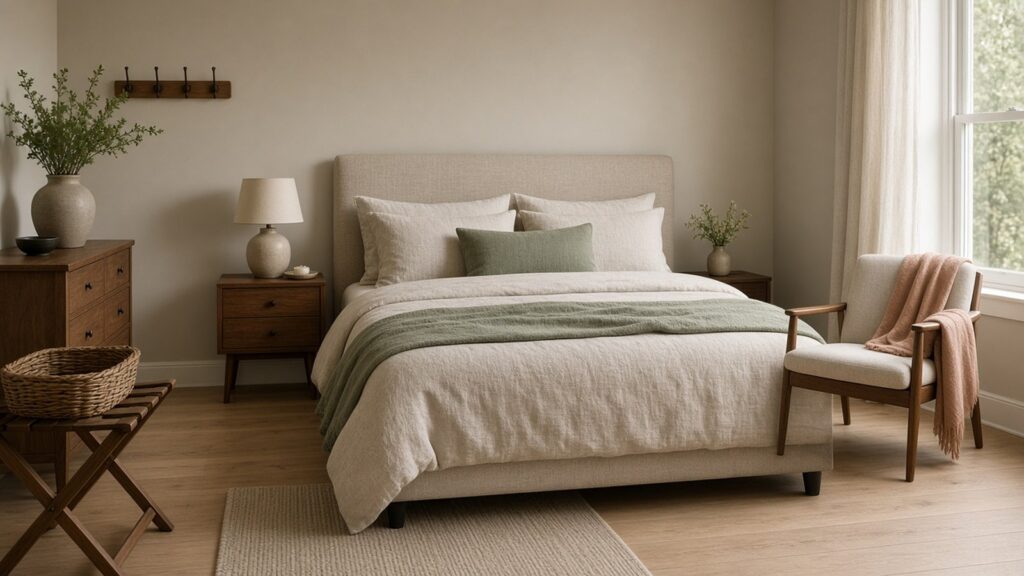
The shortest path for how to choose furniture for a guest room is this: measure the room, pick the bed first, then add only a light, a landing spot, and a place to put a bag. A dedicated spare room can take a real bed and a nightstand. A room that is also your office needs multi-use pieces, like a daybed or sofa bed and a desk that stays out of the way. For the 15-minute reset when someone is actually coming, use our holiday guest room prep checklist.
How to Choose Furniture for a Guest Room: Measure First
Buy nothing until you know the footprint. A bed that looks modest in a showroom can block a closet door once it is in the room.
- Measure the room, not just the floor. Write down length, width, and the swing of the door and closet. Note windows, vents, and every outlet, especially one you can reach from the bed.
- Tape the bed footprint on the floor. Mark the mattress size plus a few inches for the frame. Walk from the door to the closet and the window. Leave at least 24 inches on the walking side; 30 inches feels better if you have it.
- Check how furniture will get in. Measure hallways, stair turns, and elevator doors. Renters should confirm what the lease allows before adding a Murphy bed or wall-mounted piece; see our renter-friendly storage hacks.
Typical US mattress sizes (confirm the exact mattress and frame you buy):
| Size | Mattress (W x L) | Usually fits when |
|---|---|---|
| Twin | 38 x 75 in | One guest, or a daybed in a tight combo room |
| Twin XL | 38 x 80 in | Taller single guests |
| Full (double) | 54 x 75 in | A couple in a small guest room |
| Queen | 60 x 80 in | 24 in walkways and a clear closet door |
| King | 76 x 80 in | A large spare room only |
Choose the Bed First (Size, Type, and Clearance)
The bed is the only piece you cannot fake; everything else can be a stool, a shelf, or a hook. In a small dedicated guest room, a full mattress is often the sweet spot: two people can share it, with space left for a nightstand and a chair. Step up to a queen only after the tape test shows the closet, the door, and one side of the bed still open cleanly. A king rarely earns its floor space in an apartment. A twin or twin XL is fine for one regular guest, or along a short wall.
- A regular platform or frame is the most comfortable choice if the room is a guest room most of the time. Mid-height is easier to get in and out of than a very low platform.
- A daybed or sofa bed is the usual pick for an office guest room combo. Measure it fully open, including any sliding section, and keep that floor clear.
- A Murphy bed is worth it only if you will really fold it away most days. Confirm the open and closed depths, and leave room for the desk once the bed is down.
If you want the bed itself to store linens, measure the clearance under the frame, or the drawer opening on a storage bed, before you choose a low platform. See our under-bed storage ideas for small bedrooms for which containers actually fit.
The Other Pieces: A Light, a Landing Spot, and a Place to Unpack
Add only what a guest uses in the first ten minutes. You do not need a matching bedroom set.
- One nightstand or shelf at mattress height. It needs room for a lamp, a glass of water, and a phone. One side is enough; a narrow wall shelf or the cleared end of a desk can stand in. Choose a surface at the right height with a reachable outlet, not a full nightstand system.
- A lamp you can switch on from the bed. Overhead light alone is unfriendly late at night. Leave one outlet free, or put a small power strip on the nightstand.
- A chair, stool, or luggage bench so guests can set a suitcase or drape a coat. A simple chair in the corner does more work than a second decorative table.
- Somewhere to hang or fold clothes. Leave an empty rod section and a few matching hangers. If the closet is shared or tiny, a hanging closet organizer adds shelves without taking the whole rod. No closet? An over-the-door hook rack covers a weekend stay. For a tighter closet, see how to organize a small closet with no built-ins.
- A dresser only if people stay more than a night or two. One empty drawer beats a tall chest that crowds the bed. Leave the top clear; file folding helps a shallow drawer hold folded clothes.
Office Guest Room Combo: Multi-Use Pieces That Earn Their Floor Space
If the room is your office most nights, choose pieces that do both jobs, and plan the open-sleeper position first.
- Place the sleeper so it can open without moving the desk. Sofa beds and many daybeds need a clear rectangle in front of them. Put the desk on a wall the mattress does not sweep, often under the window.
- Give the desk a way to shrink. A fold-down desk, a narrow table, or a rolling cart all beat a deep desk in a small room. During a visit, a cleared desk can act as the nightstand if you leave a lamp and a charger on it.
- Use a cube bookcase as a divider and storage. Hold files on the desk side and guest towels or an extra blanket on the bed side. Fabric storage cubes drop into the openings so papers and linens are not sitting in open piles. Measure first; one common cube size is about 10.5 by 10.5 by 11 inches, but your shelf may differ.
- Share the closet in two zones. Keep work items on one side of the rod and leave a clearly empty section for guests. A hanging organizer on the guest side holds folded clothes or an extra set of sheets and folds flat when you do not need it. For more height-based ideas, see vertical storage ideas for small apartments.
- Park work in a closeable box before guests arrive. A lidded box or a file tote is enough. The furniture should make that reset easy, not force you to rearrange the room.
How to Organize Guest Room Space Around the Furniture You Choose
Once the furniture is in, how to organize a guest room comes down to leaving empty space for the visitor and giving spare linens a home you can reach quickly. Leave the nightstand, chair, and dresser top clear for a bag, book, and glass.
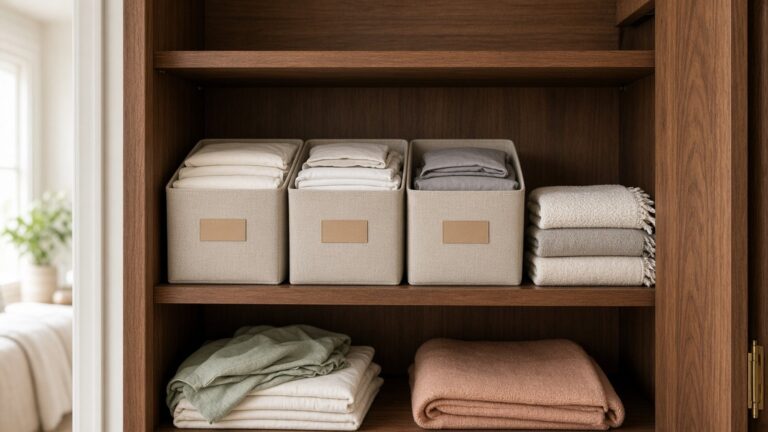
Keep one extra set of sheets and a spare blanket in the room: in the closet, under the bed, or in a cube of the bookcase. If linens live in a tight closet, see our guide to bed sheet organizers for a small linen closet for sizes. Fresh sheets, a welcome basket, and a 15-minute tidy are already in the guest room prep checklist.
Small-Room Layouts That Leave a Path
Use these as starting patterns, then adjust to your windows and doors. In a studio, the same ideas apply to a sleeping alcove; see our studio apartment organization ideas.
- Dedicated small guest room: Bed on the longest wall, nightstand on the outlet side, chair or luggage bench by the door. Keep the path to the closet straight. If the room is barely wider than a queen, switch to a full.
- Office by day, guest room at night: Daybed or sofa on the long wall, desk under the window, cube bookcase as a low divider. Keep the sleeper’s open zone clear.
- Almost no floor space: A Murphy bed or slim sofa bed, a fold-down or rolling desk, hooks on the door, and one narrow shelf as a nightstand when the bed is down.
A Budget Order for Buying Guest Room Furniture
If you cannot furnish the room at once, buy in this order. Comfort and empty surfaces beat a matched set.
- The sleep surface. A decent mattress on a simple frame, or a sofa bed or daybed you would actually sleep on. Spend here. A used frame is fine; a sagging sleeper mattress is not.
- Light and a way to darken the room. A bedside lamp and a curtain or blackout shade change the room more than a new dresser does.
- One landing surface and a place to hang clothes: a nightstand or shelf, plus hangers and a hook or a small closet organizer.
- A chair or bench, then nice-to-haves last: a rug, art, or a full dresser. Skip a five-piece set if it will fill a small room wall to wall.
Common Mistakes
- Choosing the bed by name, not by tape. A queen that blocks the closet is worse than a full with a path.
- Filling every surface. If the nightstand and chair are already decorated, guests have nowhere to put a bag.
- Buying a sofa bed for the look and ignoring the mattress. Sit on it, and check the mattress thickness and return policy.
- Skipping a lamp and a free outlet at the bed. Guests should not have to use the ceiling light or unplug a lamp to charge a phone.
- Treating an office combo like a showroom office. If every drawer and the whole desk are full of work, the sleeper will still feel like an office.
- Ignoring under-bed height until after the frame arrives. A low platform can refuse every storage bin you already own.
FAQ
What size bed is best for a guest room?
A full is the most practical default for a small dedicated guest room that sometimes sleeps two. Choose a queen only if taped walkways of at least 24 inches still leave the closet and door clear. Use a twin or twin XL for one guest, or in a tight office combo.
How do I furnish a guest room that is also an office?
Pick a daybed, sofa bed, or Murphy bed, then place the desk outside the sleeper’s open footprint. Add a cube shelf or closet zone for both files and a spare set of linens, and keep one box ready so work can leave the surfaces fast.
What furniture do you actually need in a small guest room?
A comfortable bed, a light within reach, one surface for a glass and a phone, and a place to hang or set clothes. A chair or luggage bench is next. A dresser and a second nightstand are optional.
Should I buy a sofa bed or a regular bed for a guest room?
Buy a regular bed if the room is a guest room most of the time; it will almost always sleep better. Buy a sofa bed or daybed if you need the floor and seating back on weekdays. Judge the open mattress first, not only how the sofa looks against the wall.
A Guest Room That Works Between Visits
Measure first, choose the bed for the way the room is actually used, and stop after a light, a landing spot, and a place to unpack. Keep spare linens in the room, and when guests are coming, follow the 15-minute guest room prep checklist instead of rearranging furniture at the last minute.


Leave a Reply