After work, many people do not truly rest.
They close the laptop, answer one more message, scroll for a few minutes, check tomorrow’s schedule, reheat dinner, open another app and wonder why the evening already feels gone.
The body leaves work before the mind does.
A tea ritual can help create a small bridge between work mode and home mode. It does not need to be formal, expensive or spiritual. It does not require a full tea table, a perfect gaiwan technique or a silent room.
It only needs ten minutes.
This guide shows you how to build a simple 10-minute tea ritual after work, especially if you are new to Chinese tea or slow living routines.
Why Tea Works Well After Work
Tea is useful after work because it gives your attention somewhere gentle to land.
Coffee often pushes you forward. A phone pulls you outward. Tea asks you to slow down just enough to notice water, leaves, warmth and taste.
That does not mean tea magically removes stress. It simply gives your evening a better opening move.
Instead of beginning the night by reacting to notifications, you begin by doing one quiet thing on purpose.
That matters.
The Goal Is Not Perfection
A tea ritual should not become another task you can fail.
You do not need rare tea. You do not need a beautiful tea tray. You do not need to sit cross-legged in silence. You do not need to understand every tea category before you begin.
The goal is not to perform tea culture perfectly.
The goal is to create a repeatable pause.
Ten minutes is enough because the ritual is not about drinking a large amount of tea. It is about changing your pace.
What You Need
Keep the setup simple.
You need:
- Loose leaf tea or a good tea bag
- A mug, small teapot or gaiwan
- Hot water
- A timer, if you tend to forget steeping time
- A quiet place to sit for a few minutes
If you already have a gaiwan, use it. If you do not, a mug with a basket infuser is completely fine.
The best teaware for an after-work ritual is the one you will actually use.
Choose the Right Tea for the Evening
The right tea depends on how your body feels after work.
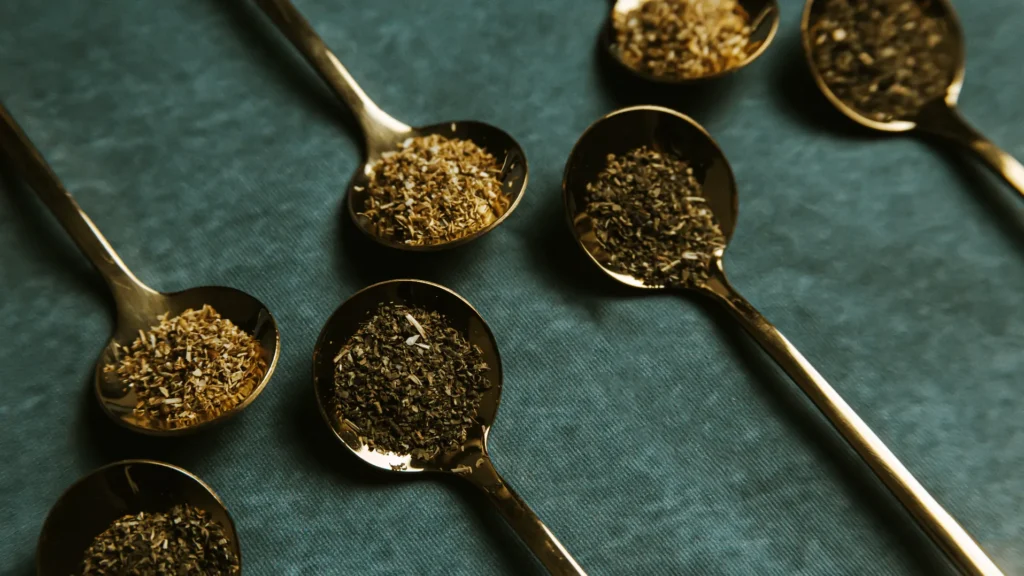
If you feel tired but still want something clear and fresh, choose a light oolong or white tea.
If you feel heavy after dinner, choose shou pu-erh or a roasted oolong.
If you feel mentally scattered, choose a familiar tea you do not need to think about.
If caffeine affects your sleep, avoid strong tea too late in the evening. You can still keep the ritual by choosing a lighter brew, using fewer leaves or switching to herbal tea at night.
For many beginners, these are good choices:
- Tieguanyin oolong for a floral and calming cup
- White Peony for a soft and gentle cup
- Roasted oolong for a warm and cozy cup
- Shou pu-erh for a deep and grounding cup
- Jasmine green tea for a fresh early-evening cup
The tea should match the moment, not impress anyone.
The 10-Minute Tea Ritual
Here is the simplest version.
Minute 1: Put Work Away
Before heating water, close the work loop.
Put your laptop away. Turn your phone face down. If you work from home, leave the desk for a moment and come back to the tea space as if you are entering a different part of the day.
You do not need a dramatic reset. Just create one small boundary.
Work is done for now.
Minute 2: Boil or Heat Water
Start the water.
While it heats, do not fill the gap with your phone. This is the hardest part for many people.
Let the kettle sound be the beginning of the ritual.
If you are brewing green tea, let the water cool for a few minutes after boiling. If you are brewing oolong, black tea or shou pu-erh, hotter water is usually fine.
Minute 3: Measure the Tea
Use a small amount.
For a mug, start with about 1 teaspoon of loose leaf tea. For a gaiwan, you can use more leaves and shorter steeps, but only do that if you already enjoy the method.
Do not overcomplicate the first cup.
The point is to make the ritual easy enough to repeat tomorrow.
Minute 4: Rinse or Warm the Cup
This step is optional, but pleasant.
Pour a little hot water into your cup or teapot, swirl it and discard it. This warms the vessel and makes the ritual feel more intentional.
If you are using pu-erh, you can also quickly rinse the leaves before the first real steep.
Think of this as a small clearing gesture.
Minutes 5-6: Steep the Tea
Add water and let the tea steep.
Use a timer if you often oversteep. Bitter tea can break the calm very quickly.
Beginner starting points:
- Green tea: 1 to 2 minutes
- Oolong tea: 2 to 3 minutes
- White tea: 2 to 4 minutes
- Black tea: 2 to 3 minutes
- Shou pu-erh: 2 to 3 minutes
The first time, follow a simple range. Next time, adjust based on taste.
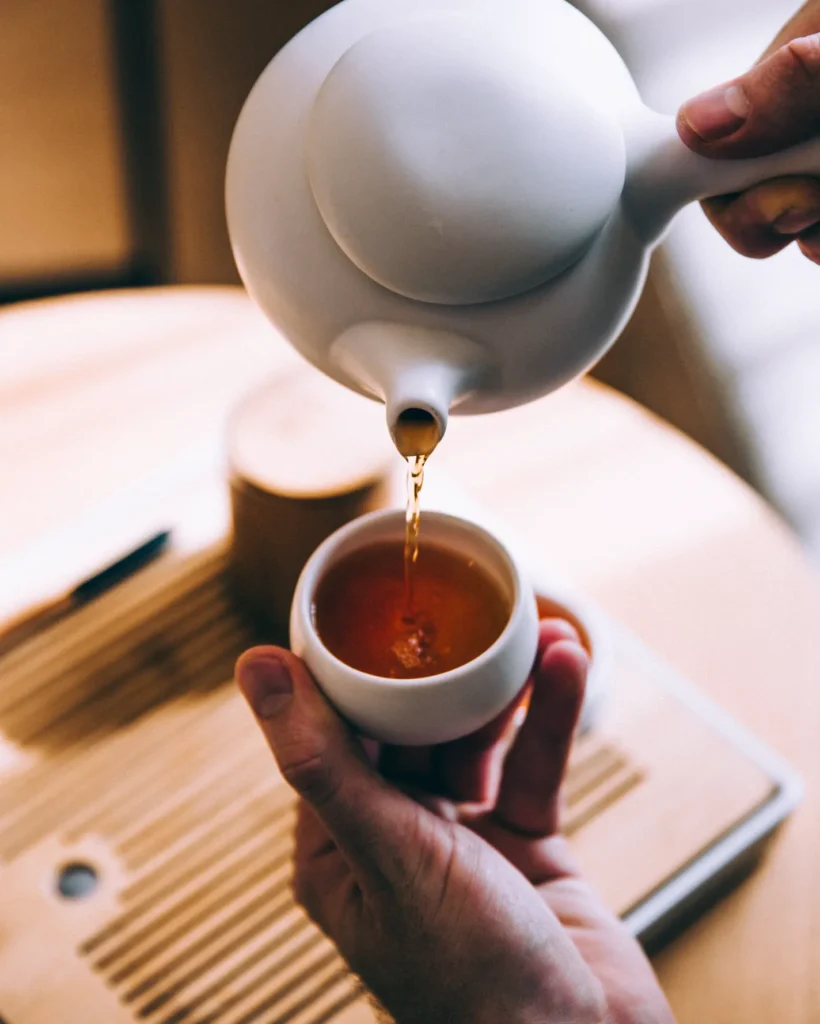
Minute 7: Pour and Pause
Separate the tea from the leaves.
This is the moment where the ritual becomes visible. You are not just making a drink. You are choosing not to rush.
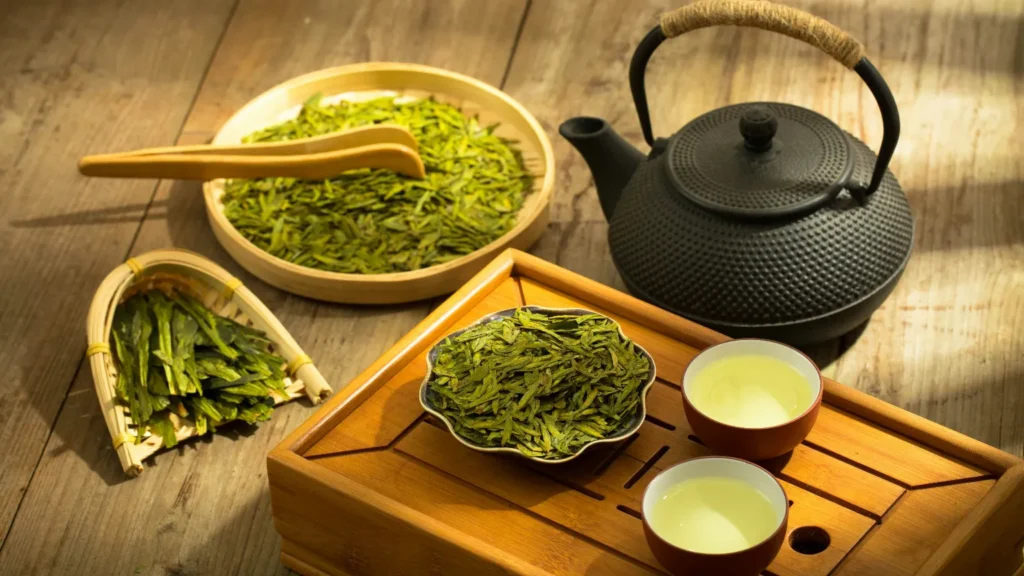
Notice the color of the tea. Notice the steam. Notice whether the aroma is floral, roasted, earthy, sweet or fresh.
You do not need to analyze it like a professional tea taster.
Just notice one thing.
Minutes 8-9: Drink Without Multitasking
Drink the first few sips without doing anything else.
No inbox. No video. No scrolling. No reading the news.
This does not need to last all evening. It only needs to last a few minutes.
Let the tea be the only thing happening.
If your mind keeps returning to work, that is normal. When you notice it, come back to the cup.
Warmth. Taste. Breath. Table. Hands.
That is enough.
Minute 10: Decide the Next Gentle Thing
At the end of the ritual, choose what comes next.
Not the most productive thing. Not the most urgent thing. The next gentle thing.
That might be:
- Cooking dinner
- Taking a short walk
- Reading one chapter
- Stretching
- Washing the cup
- Calling someone you love
- Doing nothing for a few more minutes
The tea ritual is not supposed to consume the evening. It is supposed to help you enter it with more awareness.
How to Make the Ritual Easier to Repeat
Keep the tea visible.
If the tea is hidden in a cabinet behind ten other things, you will forget it. Leave one tea, one cup and one infuser somewhere easy to reach.
Reduce choices.
Do not decide from twenty teas after a long day. Pick one weekday tea and keep it simple.
Prepare your space.
You do not need a perfect tea corner. A clean part of the table is enough. If you want to make it feel more special, add a small tray, a cloth or a favorite cup.
Repeat the same order.
The power of a ritual comes from repetition. When the steps become familiar, your body starts to understand the signal.
Work has ended. Evening has begun.
Common Mistakes
The first mistake is making the ritual too complicated.
If it requires too many tools, too many steps or too much cleaning, you will stop doing it.
The second mistake is choosing a tea that keeps you awake.
Pay attention to caffeine. If a tea makes your sleep worse, move it earlier or choose something lighter.
The third mistake is using the ritual as another productivity trick.
This is not a hack to squeeze more output from your evening. It is a way to become human again after a day of tasks.
The fourth mistake is expecting instant calm.
Some days, tea will feel peaceful. Other days, your mind will still be noisy. That does not mean the ritual failed.
You still paused.
A Simple Weekly Version
If daily tea feels unrealistic, start with three evenings per week.
For example:
- Monday: oolong after work
- Wednesday: white tea after dinner
- Friday: shou pu-erh as a slow evening reset
This is enough to build rhythm without pressure.
You can always add more days later.
Best Teas for an After-Work Ritual
For a calm but alert feeling, try oolong.
For a soft and gentle evening, try White Peony.
For a deeper post-dinner cup, try shou pu-erh.
For a fresh early-evening reset, try jasmine green tea.
For a cozy mood, try roasted oolong.
If you are new to Chinese tea, start with oolong. It is balanced, forgiving and interesting enough to make the ritual feel rewarding.
Final Thoughts
A 10-minute tea ritual after work is not about escaping your life.
It is about returning to it more slowly.
You heat water. You measure leaves. You pour. You wait. You drink without rushing. For a few minutes, your attention belongs to one simple thing.
That small pause can change the shape of an evening.
Not dramatically. Not perfectly.
But enough.
And sometimes enough is exactly what a weekday needs.