One of the most common beginner tea questions is also one of the easiest to overcomplicate:
How much tea should you use per cup?
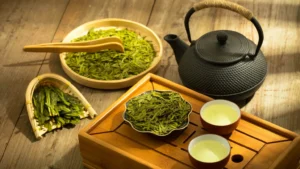
The short answer is to start with about 2 to 3 grams of loose leaf tea for a standard 240-milliliter cup. If you do not have a scale, begin with roughly 1 teaspoon, then adjust according to the size and shape of the leaves.
For tea bags, one bag is usually designed for one standard cup or mug. A large travel mug may need two bags, a longer steep or a stronger tea.
These are starting points, not laws. Tea leaves vary dramatically in density, and your preferred strength matters just as much as the number on a scale.
The basic starting point
For one standard cup of around 240 milliliters:
| Tea format | Starting amount |
|---|---|
| Loose leaf tea | 2–3 grams, or about 1 teaspoon |
| Very fluffy tea | 1–2 tablespoons by volume |
| Dense rolled tea | 1 level teaspoon may be enough |
| Tea bag | 1 bag |
| Herbal blend | 1–2 teaspoons, depending on the blend |
If your mug holds 350 to 500 milliliters, increase the amount rather than simply using the same teaspoon. A weak cup is often the result of too much water, not poor tea.
Why teaspoons are not always accurate
A teaspoon of rolled oolong may weigh more than a teaspoon of large white tea buds. A teaspoon of broken black tea may be denser again.
That is why tea scales are useful when you want to repeat a recipe. They let you compare teas more fairly and keep track of what worked.
But a scale is not required for a good cup. Spoon measurements are perfectly reasonable when you are learning. The key is to use the same spoon and the same cup while you experiment.
Think of a teaspoon as a visual starting point, not a precise scientific measurement.
How much loose leaf tea per mug?
For an ordinary mug, start with 1 teaspoon of most loose leaf teas. Brew it according to the tea’s instructions, then taste it.
If the cup tastes thin or watery, use more leaf next time. If it tastes bitter, dry or overpowering, try less leaf or a shorter steep.
You can also keep the amount the same and reduce the water. A smaller, more concentrated cup can be easier to enjoy than a large mug made with too little tea.
How much tea for a teapot?
For a small teapot holding around 500 milliliters, try 4 to 6 grams of loose leaf tea. You can also use roughly 2 teaspoons as a first estimate.
Some tea drinkers use a “one teaspoon per cup, plus one for the pot” rule. It is easy to remember, but it does not work perfectly for every tea. A large pot made with too much extra leaf can become overly strong, especially with small broken leaves.
If you are serving several people, consider brewing a little stronger and adding enough hot water to each cup, or brew shorter infusions and refresh the pot. The best method depends on whether you want one large pot or several small rounds of tea.
Amounts for different tea types
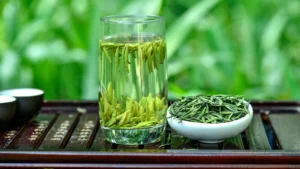
Green tea
Start with 2 grams per 240 milliliters, or about 1 level teaspoon for many green teas.
Green tea can become bitter when you use too much leaf, very hot water and a long steep all at once. If your cup is harsh, change one variable at a time. Try cooler water first, then a shorter steep, then less leaf.
Large, flat green tea leaves may need more volume than small, dense leaves even when the weight is similar.
Black tea
Start with 2 to 3 grams per cup. One teaspoon is a useful starting point for many black teas.
Broken-leaf breakfast teas can brew quickly and strongly. Whole-leaf black teas may need more time to open and release flavor. If you add milk, sugar or ice, you may prefer a slightly stronger brew.
Oolong tea
Oolong has a wide range of shapes and styles. For western-style brewing, begin with 2 to 3 grams per cup. For small-pot or gaiwan brewing, you may use more leaf—sometimes 5 to 8 grams in a 100- to 150-milliliter vessel—but steep for a shorter time.
Rolled oolong leaves expand significantly, so do not fill a small vessel to the top with dry leaves. What looks like a tiny amount at the start may become a full pot after the first infusion.
White tea
White tea can be light and fluffy, so volume measurements are especially unreliable. Start with 2 to 3 grams per cup, which may look like a large handful compared with dense black tea.
White tea is often forgiving. If the flavor is too light, add more leaf or extend the steep. If the cup becomes dry, try cooler water or a shorter infusion.
Pu-erh tea
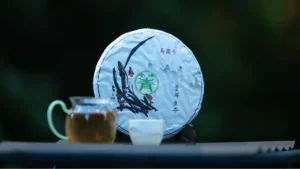
For loose pu-erh, start with around 3 grams per cup. For compressed tea, break off a small piece and adjust after the first brew.
Pu-erh is often brewed in small vessels with more leaf and short infusions. A 5-gram piece in a small gaiwan can produce several concentrated rounds, while the same amount in a large mug may taste quite different.
Rinsing compressed pu-erh briefly with hot water can help the leaves open, but it is not a substitute for using a sensible amount.
Herbal tea
Herbal blends vary widely. Dense spices, large dried flowers and fluffy leaves do not measure the same way.
Start with 1 to 2 teaspoons per cup and check the product instructions. Many herbal infusions need a longer steep than true tea leaves because the ingredients are larger and harder.
Remember that some herbal blends are naturally caffeine-free, while tea made from Camellia sinensis contains caffeine unless it has been decaffeinated.
Tea bags: one bag per cup?
Usually, yes. Most standard tea bags are portioned for one cup.
However, “one cup” may mean around 200 to 250 milliliters rather than a large 450-milliliter travel mug. If you brew one bag in a very large mug, the result may be weak.
You have three options:
- Use two bags
- Use less water
- Steep for longer, while watching for bitterness
Pyramid bags and larger sachets may contain more leaf and can work better in a large mug. Check the package instructions before adding extra bags automatically.
How strength, time and temperature work together
Tea strength is controlled by more than the amount of leaf.
The main variables are:
- Amount of tea
- Amount of water
- Water temperature
- Steeping time
- Leaf size and processing
Increasing any of the first four can make the brew stronger, but the result is not identical. More leaf often creates more aroma and body. Longer steeping can create more bitterness and dryness. Hotter water extracts flavor quickly, which may be helpful for black tea but harsh for delicate green tea.
When adjusting a cup, change one variable at a time. Otherwise, you will not know what fixed the problem.
A simple adjustment guide
If your tea is too weak:
- Add slightly more tea next time.
- Use less water.
- Increase steeping time by 15 to 30 seconds.
- Check that the water is hot enough for the tea.
If your tea is too strong:
- Use a little less tea.
- Shorten the steep.
- Lower the water temperature for delicate tea.
- Add hot water after brewing if the tea is already made.
Do not immediately blame the tea. Many disappointing cups come from a mismatch between the amount of leaf and the size of the mug.
If you’re completely new to tea types and brewing, start with our Chinese tea beginner’s guide first.
Western-style brewing versus gongfu brewing
Western-style brewing usually uses a moderate amount of tea in a larger cup or pot, followed by a longer steep. It is simple and convenient for one generous serving.
Gongfu brewing uses more leaf in a smaller vessel, with short repeated infusions. The high leaf-to-water ratio is balanced by the shorter steeping time.
For example, 3 grams in a 300-milliliter mug and 6 grams in a 100-milliliter gaiwan are not directly comparable. The second method uses more leaf per volume of water, but the tea may only touch the water for a few seconds at a time.
Choose the method before judging the amount. A gongfu recipe can taste overly strong if copied into a large mug without changing the water and steeping time.
Should you re-steep the leaves?
Many loose leaf teas can be steeped more than once. Oolong, pu-erh and some whole-leaf black and white teas often change character across several infusions.
If you plan to re-steep, you may use slightly more leaf and shorter initial steeps. Keep the leaves moist between infusions, but do not leave them warm and wet for an entire day.
Tea bags can sometimes be re-steeped, but the second cup is often lighter. Whether it is worthwhile depends on the tea, your taste and how much flavor remains after the first cup.
Do you need a scale?
No. A scale is helpful, especially if you are comparing teas or using small brewing vessels, but it is not a requirement.
Start with a teaspoon, take a quick note and adjust. If you find yourself repeatedly wondering why the same tea tastes different, a small digital scale may solve the mystery.
The most important habit is consistency. Use the same cup, the same spoon and roughly the same water amount while you learn.
The beginner recipe
For a standard mug of loose leaf tea:
- Measure 2 to 3 grams of tea, or start with 1 teaspoon.
- Heat fresh water to a temperature suited to the tea.
- Use about 240 milliliters of water.
- Steep according to the package instructions.
- Taste before changing anything.
- Adjust the next cup, not the current cup with random extra variables.
For a tea bag, use one bag for a standard cup and adjust for larger mugs.
Final thoughts
There is no single correct amount of tea per cup. The right amount depends on the tea, the vessel, the water and the kind of cup you want.
Start with 2 to 3 grams of loose leaf tea per 240 milliliters. Use one tea bag per standard cup. Then pay attention to what you taste.
More tea is not always better. Longer steeping is not always stronger in a pleasant way. A balanced cup comes from adjusting the whole recipe rather than chasing one perfect number.
Measure once, taste carefully and let your own preferences become the final guide.